Have you ever posted a photo on Instagram only to change your mind about sharing it with the public? Obviously, deleting said photo is an option, but there’s also a less radical option. By using Instagram Archive, you can temporarily remove a photo, then put it back on your profile later if you change your mind — the perfect solution for the whimsical photographer.
Instagram Archive is an ingenious little tool, not just for the indecisive among us, but also for when it comes to sharing memories, highlighting Stories, and increasing engagement on your posts. Here’s how to use Archive to your advantage on Instagram.
So, what exactly is Instagram Archive? This nifty feature was rolled out in 2017 and enables users to remove photos and videos from their profile without deleting them entirely. With Instagram Archive, you can still see your archived photos, but the rest of the world won’t know they exist.
Instagram Archive stores both Posts and Stories, and while you have to archive posts manually, you can easily adjust your settings so that your Stories are automatically added to Instagram Archive after 24 hours.
You can enable automatic archiving of your Stories within your settings on Instagram.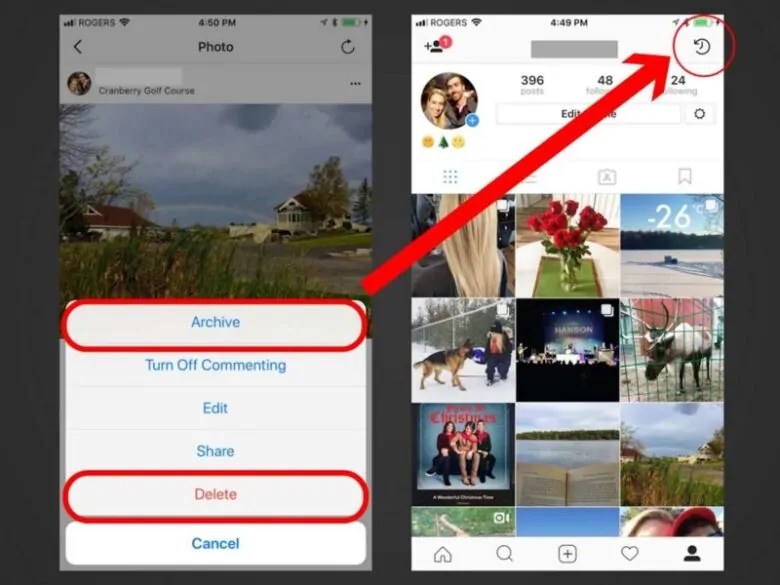 Here’s how to do it:
Change your mind about a post you’ve archived? Here’s how to add it back to your profile:
Now that you know the basics of Instagram Archive, here’s how to use it creatively to engage your audience.
The Highlight feature on Instagram is a fabulous way to show off your best Stories right on your profile. Because all of your Stories are automatically archived, it’s easy to create and change your Instagram Story Highlights with a few taps. Here’s how to add archived Stories to your Highlights:
Did you know that Instagram keeps track of your post dates so that you can add them as Stories to increase engagement? Your Memories are located in your Instagram Archives under Stories. Depending on how long you’ve been posting to Instagram, you may see one or more Memories. Next to your post, it will say “On This Day – [x] years ago today,” followed by a Share button. To share your post to your Stories, simply tap the button and create your Story.
An Instagram theme is simply a cohesive look for your feed based on a specific style, color, or type of photo. You don’t have to create a theme for your Instagram account in order for it to be successful, but Instagram accounts with recognizable themes often see more engagement and recognition. Want to try it for yourself without harming your account? Decide on a theme and choose the posts that fit within it. Archive the rest. It’s that simple. If you don’t love your new theme, all you have to do is return your archived posts to your feed.
Using Instagram Archive gives us opportunities to increase engagement by using the analytics from an archived post to repost for more engagement. By using Instagram Insights, you can easily see which posts got the least amount of engagement over the past year. Now, maybe those photos were subpar to begin with, but it could also be that you posted the photo at a weird time, your caption was humdrum, or you didn’t make good use of your hashtags. You can test your theory by archiving those posts and creating new posts from the same photos using a different technique to get more engagement.
Like most social media platforms, the lifespan of a single Instagram post can be pretty short. You may see engagement for a few days, but after that, your views, likes, and comments will probably tank, and you will have to create a new post for your followers to enjoy. If you’re running out of new photos to post, you can reuse some old photos you particularly like by archiving them and posting them again? Not only does this breathe new life into your photos, but it frees up more of your time.
Ready to kick your Instagram game up a notch? It’s time to show off your best work, encourage engagement, and attract new followers, all with Instagram Archive.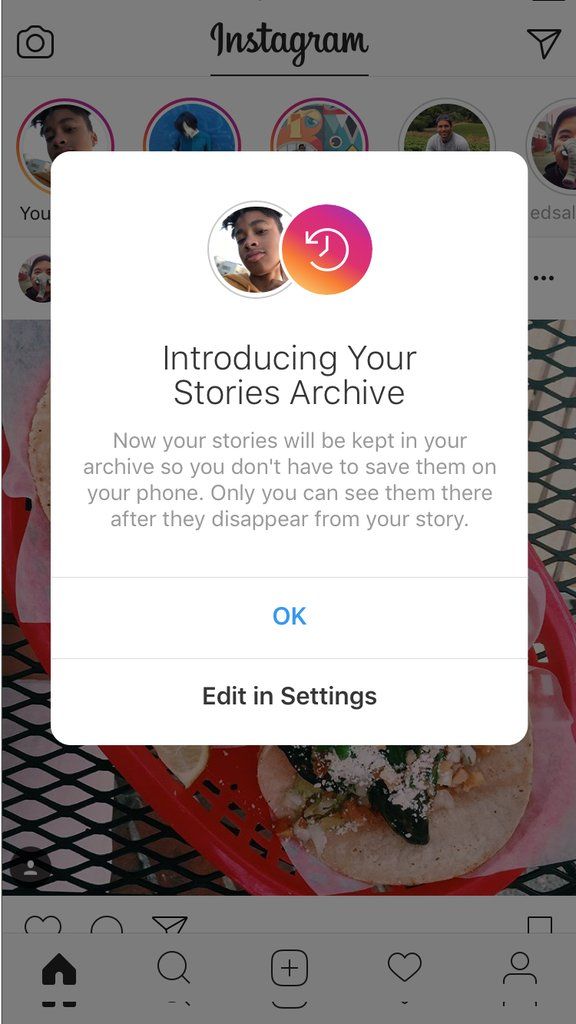
Travel writer. Photographer. Lover of dogs and the outdoors.
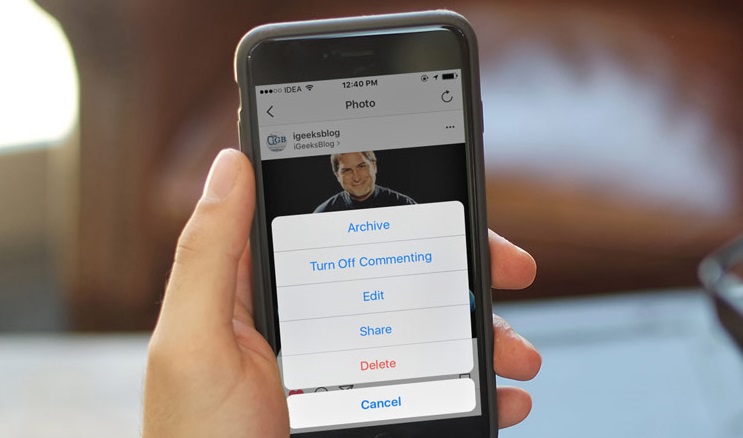
Rather than users deleting content and losing the company’s potential revenue, Instagram offers a way to save it for later. It’s also beneficial to personal users because they can quickly bring up seasonal images or posts and adjust them. Rather than delete the post entirely, you can now archive it to remove it from the public’s eye. You can still view the post privately to use at a later date, but nobody else sees it. Live streams and stories get archived automatically, but this content is about “Instagram Posts.” Lets’ get started.
The Instagram “archive” feature contains a section for stories, live streams, and posts. The Instagram “Posts” category has an opt-in feature that you must use manually. Instagram does not automatically archive old or deleted posts like other systems—just stories and live streams.
When you archive a post, it remains there until you manually delete it or un-archive it. As previously mentioned, Instagram Archive gets split between posts, stories, and live content. You’ll want to view your posts.
To access the Instagram archive:
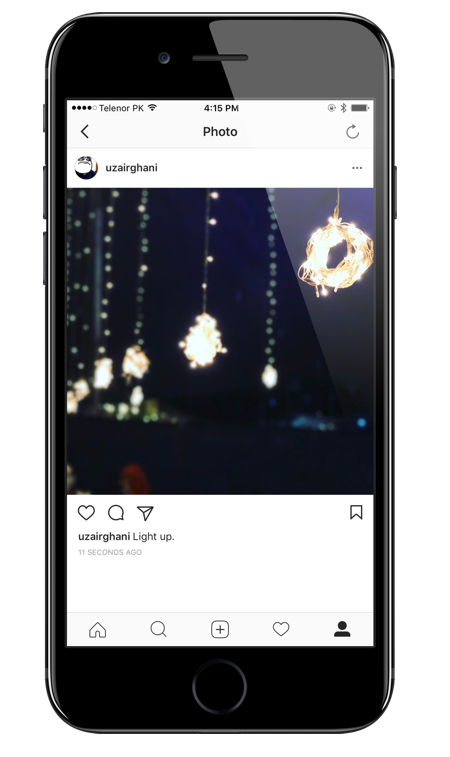
As mentioned above, the archive is for you only and is not publicly viewable.
Your Instagram post now appears in your archives for later use.
Unarchiving Instagram posts is very straightforward when you want to bring a post out of hibernation and back into your profile. Go into your Instagram archive and select the option to show it on your profile again.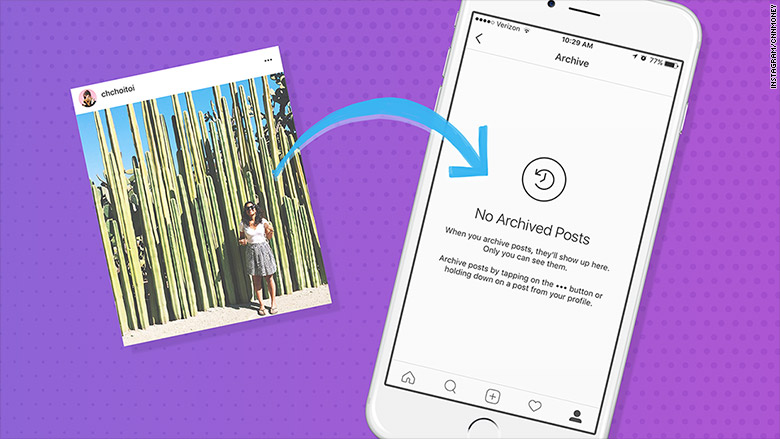 There is no restore option, just the choice to place the archived post on your profile. Essentially, that is the same thing in this situation.
The post now becomes active once more and is publicly viewable.
If you prefer to delete your archived post instead of making it public again, you can do it by selecting “Delete” instead of “Show on Profile. ” Your post gets deleted forever and is not recoverable. Sometimes that’s a good thing!
In closing, the Instagram archive feature is a neat idea that gives you control over what others see, whether for personal use or business. While we are gradually adjusting to the temporal nature of online life, some things are worth keeping for the longer term. If you don’t keep those memories close, at least you can preserve them on Instagram.
For social media savvy businesses, this is a way of using posts and media multiple times or for seasonal offers that repeat annually or regularly. Why create a Christmas offer each year if you can archive and tweak it and then make it public again? As for personal use, the Instagram archive feature lets you store posts or images you might want to reuse later, hold onto for personal reference, or even adjust them.
Instagram* allows you to save not only stories, but also posts.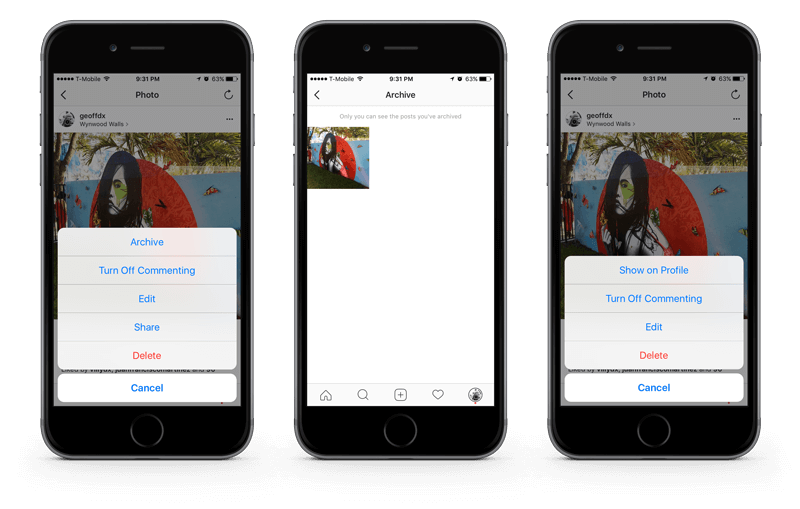 But how do you unzip a post? We understand in a series of short instructions.
Post archiving is a useful tool that allows you to save posts, live broadcasts and stories in a separate section. Only the owner of the account can see it, the content in the archive is not available for viewing by other users of the social network.
In everyday life, the function is useful if you need to remove irrelevant posts, which, for some reason, it is a pity to delete permanently. Commercial accounts can use the tool more broadly. For example, as part of an advertising campaign, they can temporarily hide all publications in order to post one big post with a promotion. It attracts attention, conveys a sense of scale and creates intrigue.
Posts can be hidden in order to temporarily place such ads in the profile old. In order not to delete old posts, it's easier to hide them. What about stories? They are automatically saved to archives, from where it is convenient to pull them out later to save to your phone, repost or send to highlights. For more information on how albums work in general, read the separate article “How to add and change Instagram Highlights*”.
How to work with archives and restore posts - we will tell further in small and visual instructions.
When archiving, the post will be saved with all comments, hashtags, tags and publication date. It will be hidden from your feed and the feed of other users, only you will see it in a special section.
How to send a post to the archive:
The application interface on iPhone and Android is the same, so this instruction (and all subsequent ones) is relevant for any phone.
The social network automatically sends stories to the archive 24 hours after publication. But if they are not displayed in the "Archive" section, then saving must be re-enabled. There are two ways: through the settings and while browsing.
Enable saving stories through the settings:
Enable saving stories through the view menu:
Recently, deleted posts are stored for 30 days, during which time they can be pulled back. But for this you will need to verify your identity using a special code that will be sent to your email.
How to get back a deleted post on Instagram *:
After unzipping, the post will return to the feed with all comments and the same publication date as it was.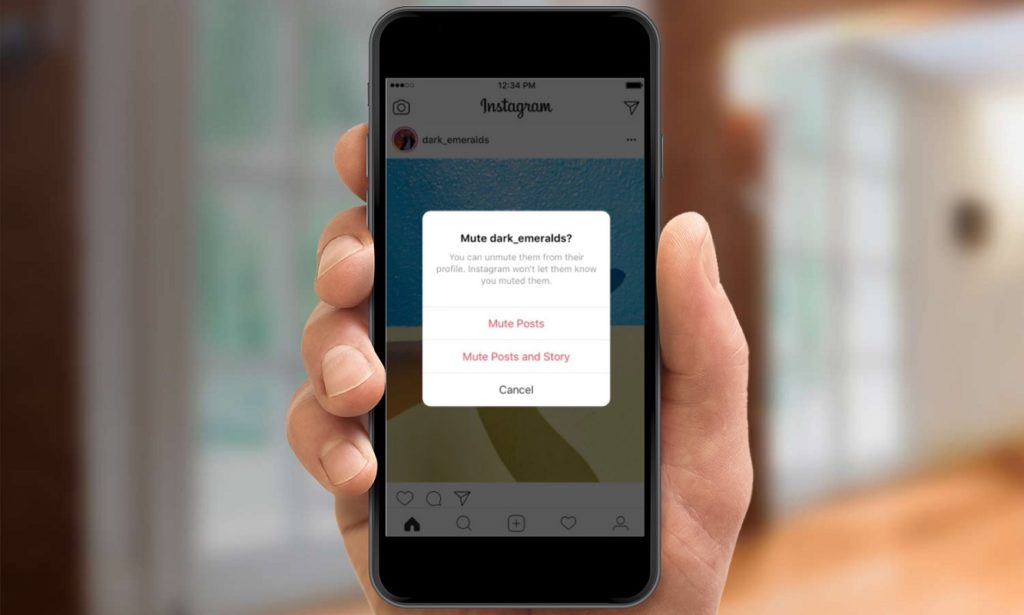 It will take the place in the feed where it was previously, i.e. it will not be re-published. As I said above, the social network does not delete posts - it rather hides them in the archive with a further opportunity to return everything as it was.
How to restore photos from the archive on Instagram *:
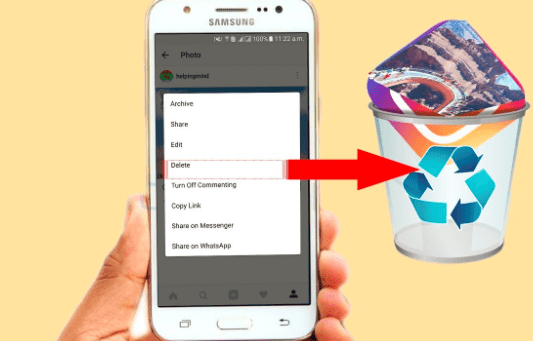
You can also remove a post from the archive on Instagram* by clicking "Delete". Then the post will go to the trash, where it will be stored for 30 calendar days. See above for instructions on returning posts.
How to unarchive a post on Instagram* There are more opportunities for unarchiving stories: you can re-publish as a repost, send to a post, save to Actual or upload to your phone in the gallery.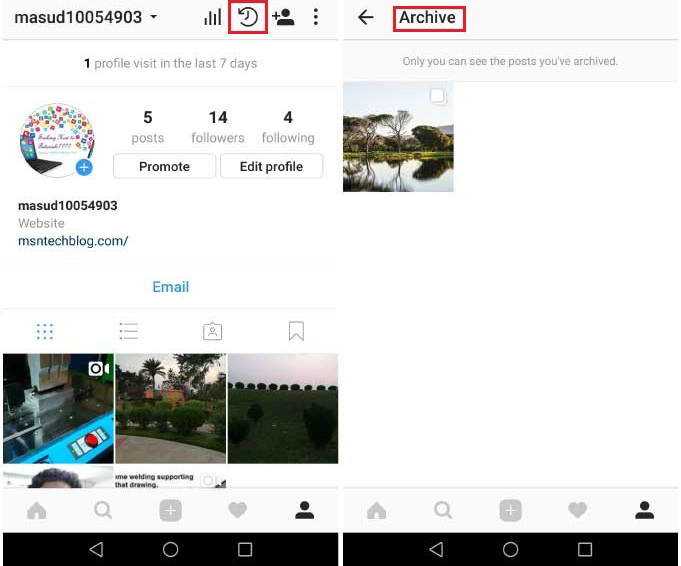
How to download stories from the archive:
For more information on how to download stories, read the guide “How to download stories from Instagram*”.
How to add a story from the archive to the Feature:
How to send a story to a post:
How to get a story from the archive on Instagram* and publish it again:
Is it possible to return photos to Instagram* from a computer? Unfortunately, the social network site does not have a menu with archives of publications. Therefore, even if you switch to mobile layout, you will not be able to access the archives.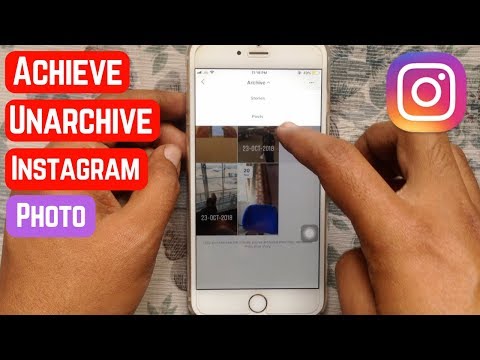 Of course, you can install an Android emulator on your computer, download the application from Google Play and go into it, but it seems easier to use the phone.
On the other hand, posting from a computer is often convenient, especially if you have to type a lot of text on the keyboard and regularly make interactive stories. These opportunities are provided by the delayed posting service SMMplanner - where you can also put many posts and stories into postponement at once, which frees up a lot of time.
We can customize all aspects of a post: text, photo, video, hashtags, tags, comments. You can even upload a video and make a story with full functionality (stickers, polls, gifs, etc.) Of course, the service will be useful primarily for SMM-persons and those who maintain several accounts and cross-post to several social networks at once. In any case, try it - the first week is free, and during this time it will become clear for sure whether you need such wide functionality or not.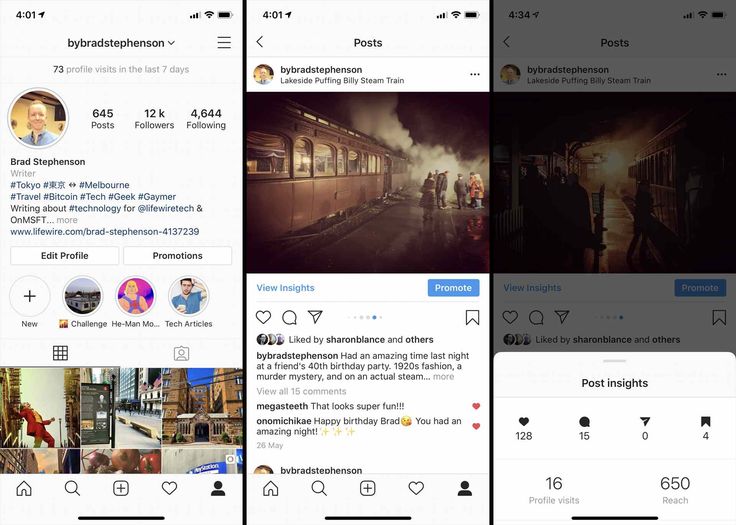
After the next Instagram update, some users lost the archive from the settings. If this is the first time you hear about the archive, a small note is a place where you can transfer posts, stories and live broadcasts so that they are visible only to you.
This article will tell you how to find an archive and how to restore a publication from an archive.
Start placing official ads in Telegram Ads. Get ahead of your competitors!
Register and sell goods or services in Telegram Ads using a ready-made solution from Click.ru .

Read more>> Advertising
Read also: 25 most common mistakes on Instagram
The archive is located in the profile menu. Click on the 3 horizontal lines, the menu opens. Between the settings and statistics there should be an item "Archive".
If not present, solutions:
1. Update the application. Usually this is enough for the "Archive" item to return to the menu.
2. For some users, the archive has moved to the "Your activity" item. Open the profile menu, go to the activity, scroll down - there should be an item "Archive". It can also be displayed simultaneously in the profile menu and in the "Your activity" menu.
3. If none of the methods helped, we make it easier. We go to the profile menu, then to "Settings". In the search bar, write the word "Archive".
Interesting: 33 Instagram post ideas
There are 3 types of archive in the Archive section. By default, archived stories are displayed. If you click on the checkbox, all views will be displayed.
How to return stories. Stories cannot be returned from the archive, because stories are only stored for 24 hours. To keep them longer and be visible to other users, they can be placed in the actual. But a story from the archive can be shared with contacts in Direct, and it can also be posted as a new story memory.
To share a story, find it in the archive, open it, then click "More" to bring up the menu. To send to Direct, click "Send" and select a contact.
To place it as a story-memories, select the “Share” item in the menu. Instagram automatically puts down the date of the memory, that is, when the story was posted for the first time.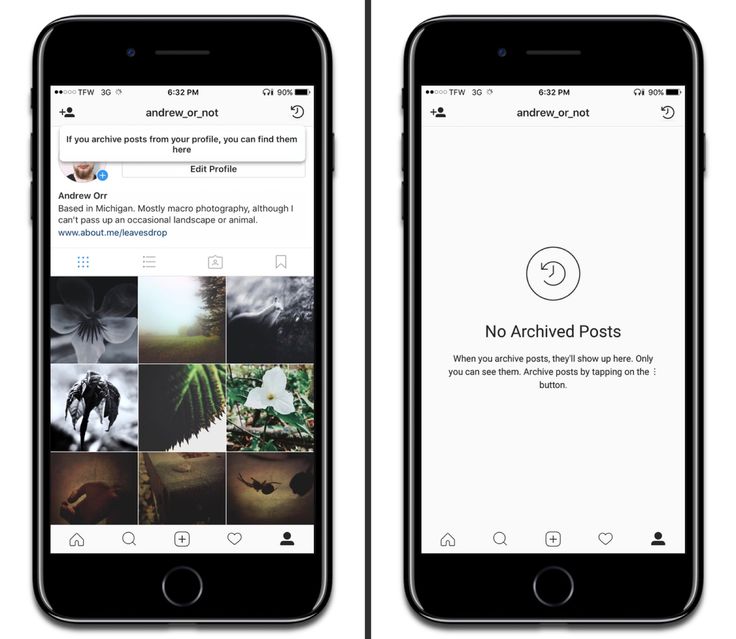
How to return a post from the archive. Open the archive of publications, click on the post. Then 3 dots in the upper right corner, select "Show in profile" in the menu.
*You may find that the post never appeared on the profile, although it disappeared from the archive. What to do in this case is to exit Instagram, remove it from the background (that is, close it completely). Then re-enter the application. The post will appear on the account page.
Recording of the live broadcast can be downloaded from the archive to the device or uploaded to the profile.
The temporary disappearance of the archive on Instagram from the menu is due to the update of the application and the fact that for some users this item has moved to another section (Your activity). Perhaps the social network is testing where it is better to place the archive. Please note that this item may appear differently for users of iOS and Android devices.