In many ways advertising on Instagram is the same as advertising on Facebook. This shouldn’t come as a surprise, with Instagram being part of the Facebook network. We recently covered how to work out the cost of your Facebook ads. This article shifts the focus to Facebook's very visual, rapidly increasingly popular sibling, Instagram. Just how much does it cost to advertise on Instagram?
As with Facebook, there is no set price for advertising on Instagram. You create a bid for your ad’s placement. In theory, Instagram will place the ad of the company that makes the highest bid for any particular advertising slot. In reality, it is much more complicated than this, and you can not guarantee that Instagram will accept any ad you provide and serve it on the Instagram accounts you bid for. There is more to obtaining a spot for your ad than just making the highest bid.
You can expect that you will have to pay somewhere between 20 cents and $2 per click (CPC) on an Instagram campaign. According to Revealbot data, the average Instagram CPC in July 2021 in the United States was $1.28 per click, as opposed to 2022 CPC which is $1.33 per click. However, if you prefer to run your ads on a cost per mille (CPM) basis, focusing on impressions, the average Instagram CPM in July 2021 in the United States was $8.51, compared to 2022 CPM which is $10.39. In comparison, the average Facebook CPC in July 2021 was $1.01 per click, and the average Facebook CPM was $12.91.
Smart Insights has collated statistics comparing clickthrough rates (CTRs) for display ads, paid social ads, and Google Ads. Unfortunately, the CTRs have generally dropped across most types of online advertising over recent years. They found that the ad clickthrough rate in the Instagram feed was 0.22% in Q1 2020. This was significantly lower than in the previous year when it was 0.60% in Q1 2019. However, the CTR for Instagram Stories was higher at 0.33%. As a comparison, the average Facebook CTR in the newsfeed is 1. 11%, also a downwards trend from 2019.
Instagram advertising has increased markedly over the last few years. In March 2017 they enjoyed their 1 millionth advertiser.
If you read our earlier article on the cost of Facebook ads, you will have seen that Facebook offers Instagram as one of the locations you can bid to place your Facebook ads. When you bid for your Facebook (group) ads, they encourage you to position your ads at the following locations:
Feeds:
Stories:
In-Stream:
Search:
Messages:
In-article:
Apps:
Oculus:
Every Facebook advertiser is encouraged to add Instagram to their advertising preferences – they are given discounts for doing so.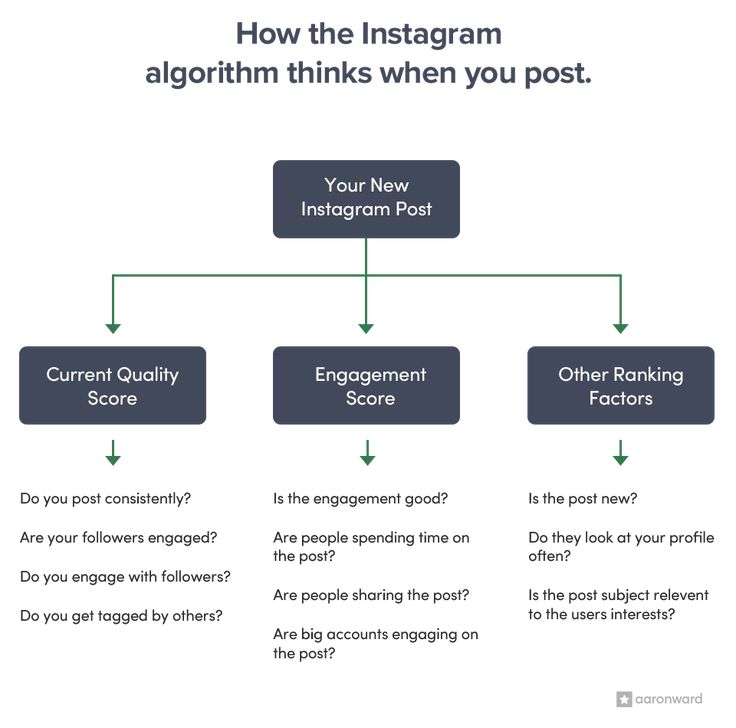
While some companies might choose a mix of both Instagram and Facebook ads, it will very much depend on your target market. It makes the most sense to advertise where your customers (and potential new clients) spend their time.
Facebook has the advantage of its vast user base. It reported a colossal 2.89 billion monthly active users as of the second quarter of 2021. Sure, your target audience may not regularly use Facebook, but most do. Also, as you can see from the above list of advertising types, Facebook has more advertising options than Instagram does.
On the other hand, if your target audience matches Instagram's main demographic, you will benefit from advertising there.
According to data reported by Statista, about 60% of Instagram's users are aged between 18 and 34. Although the balance between the genders is relatively even overall (51% females, 49% males), it is less so in the 18-34 range. Overall, 32.1% of Instagram users are males aged 18-34, while 29.9% are females of the same age. Instagram is also the third most popular social network for teenagers in the United States. In Fall 2020, 25% of US teenagers ranked Instagram their favorite social app, after only Snapchat (34%) and TikTok (29%). Facebook was preferred by only 2% of the teenage respondents.
Clearly, if you sell to people under 34, you should seriously consider including Instagram ads in your marketing mix. You might well consider some Facebook advertising, too, although less so if Generation Z is your target market.
Assuming that your target audience spends time on their Instagram apps, there are excellent reasons for adding Instagram to your marketing mix.
Traditionally, Instagram has a higher clickthrough rate than Facebook. While not true currently, as SmartInsights has shown, that has been the exception rather than the norm. At most times, Instagram's CTR has been much higher than that of its older sibling.
Like Facebook, Instagram provides advanced targeting opportunities with its ads. You can home in on your target audience and not waste funds advertising to the wrong people. You can target your ads based on location, demographics, interests, behavior, and lookalike audiences, as well as letting Instagram/Facebook target automatically. You can also create custom audiences and retarget those people who have already interacted with your business.
Instagram can also drive higher average order values (AOV) than other social networks, depending on your industry. For example, research by eCommerce personalization platform Nosto found that Instagram achieved an AOV for paid posts of $103 on mobile for fashion retailers. In comparison, Facebook's paid AOV was $69, and Snapchat's paid AOV was $57.
Instagram has far higher engagement rates compared to Facebook. According to data in We Are Social's Digital 2021 July Global Statshot Report, the average engagement rate for all post types on Instagram is 0. 83%. Engagement for photo posts is 0.81%, video posts 0.61%, and carousel posts 1.01%. In comparison, Facebook’s average engagement rates are 0.11% (all posts), 0.16% (photo posts), 0.13% (video posts), 0.05% (link posts), and 0.17% (status posts).
As with Facebook advertising, three main factors affect what you will have to pay for your Instagram ads:
Estimated action rates combined with ad quality measure ad relevance. Instagram subsidizes those ads they consider relevant to the people who will view your ads. A lower bid could succeed over a higher bid from somebody else because of better relevance.
Instagram now uses ad relevance diagnostics in place of their previous ad relevance score. You can use ad relevance diagnostics to diagnose underperforming ads. Ad relevance diagnostics look at your quality ranking, engagement rate ranking, and conversion rate ranking. Ideally, you want all three factors to be average or above.
Facebook explains these factors in more detail in their Help section.
A crucial factor from this is that your Instagram advertising price is not affected by your bid alone. You can reduce your advertising costs by creating quality ads that people will value and focusing your ad content on the most suitable people.
Obviously, competition will also play an essential role in determining your Instagram advertising cost. For example, if you have multiple people bidding for the same target audience as you, you may have a bidding war, increasing the overall cost. Some of the many factors affecting competition include:
Too many people place ads on Instagram (and often Facebook) without knowing what they are doing. It should be no surprise, therefore, that these people often lose money. You need to think carefully about the people you are targeting and create the perfect ad for these people.
Ads Manager is the starting point for running ads on Facebook, Instagram, Messenger, or Audience Network. It's an all-in-one tool for creating ads, managing when and where they'll run, and tracking how well your campaigns perform.
Facebook / Instagram splits its Ads Manager into three sections:
They allow you to build your ads up following these three parts:
1. Set Campaign DetailsYou begin by selecting your objective for your entire Instagram Marketing Campaign
There is no value going into this process without knowing what you wish to gain out of it. You need to begin your campaign by setting campaign goals and objectives.
The Facebook / Instagram Ads Manager offers you 11 different marketing objectives in three categories:
Awareness
Consideration
Conversion
Make sure you don’t select an irrelevant objective for Instagram – for instance focusing on Messages (which is designed for those wanting to get more people to send messages to your business in Messenger).
If you are just beginning your advertising on Instagram, it is a good idea to optimize for conversions. Instagram will target your campaigns to give you your best results at a lower price.
You may have various settings to choose from, depending on your preferred objective. For instance, if you opt to focus on increasing traffic you are asked whether you want to target a website, app, or Messenger.
You are then asked whether you want to create an offer to help encourage people to convert, depending on your objective.
You are then given the opportunity to define your audience. If you want the best price for your ads and the best ROI on them, you want to be smart and create a selected audience.
You are given quite a few options for targeting your ads, and you can save your audiences so that they can be reused in future campaigns.
Don’t waste money by broad targeting. You might think that you will have a higher chance of converting if 10 million people see your ad – but the majority of these people have no wish to buy anything from you.
You can target based on:
Facebook / Instagram will give you an indication of your estimated daily reach and expected post engagement. They will indicate whether you have targeted your audience specifically or broadly.
You then choose your placements. This is where you select to focus your advertising on Instagram, rather than Facebook. You will need to deselect Automatic Placements and instead opt for Edit Placements. Amongst the options you encounter are Instagram Feed and Instagram Stories. The device type doesn’t matter as you can’t select Instagram for Desktop.
It is a good idea to do this even if you want to do a combined campaign involving Facebook, too. By selecting your placements yourself, you have more control over your campaign optimization.
You have a few other options here, for instance, you can choose to target all mobile devices, or just iOS or Android.
Finally, in the Ad Set section, you provide your budget. You can either pick a daily budget limit or give a total Lifetime Budget amount for your entire ad set.
When you set a daily budget, you create an average, rather than an absolute limit. This is particularly important if you choose to set a budget based on an action. Instagram may be able to control the number of times they serve ads (thus limiting the impressions you have to pay for). But it is harder for them to manage how many times people click on a particular day. There are days where many people may click. If you have CPC pricing, you will go over your budget that day, but Instagram will try and compensate tomorrow.
You also have the chance to state the timeframe in which you want your ads to run.
You also have a few options to optimize your ad delivery. For instance, you can choose whether you want your Instagram ad to run multiple times per day to a person, or just the once. You can select what kind of optimizations you wish for ad delivery. For instance, you can ask Instagram to concentrate on delivering your ads to people most likely to click on a link or view a landing page. You may ask them to show your ads to as many people (within your defined audience) as possible, and focus on impressions.
You also define the method by which Facebook / Instagram charges you, e.g., are you paying cost per click (CPC), or by impressions (CPM), or by another metric?
You also have the option to select Manual or Automatic Bidding. Many people recommend that newcomers go with Automatic Bidding, but you may prefer to bid manually once you are experienced with advertising on Instagram.
If you opt for Manual Bidding you have a further choice to make: should you set Maximum or Average bids?
If you select Maximum bid, then Instagram won’t run your ads if the cost per result would be higher than your bid. You would choose this if your goal is to maximize profit.
If you select Average bid, Instagram optimizes your ad delivery to maximize your ROI – they call this the Pacing method. The Pacing method ensures that you don’t use up all of your budget early in the day, and miss out on profitable opportunities later in the day. You would select the Average bid if you want to maximize delivery, i.e., you would get more conversions, but some may cost more than what would otherwise have been your maximum bid.
You should probably begin with automatic bidding until you can build up data showing your cost per result.
One common suggestion the experts make is that if you opt for Manual bidding, select a figure towards the bottom end of Facebook’s suggested bid range.
This section focuses on your actual Instagram ads.
Your first option is to select an ad format. You can choose from:
Note that the option of Collection is currently only available for the Mobile Facebook feed – not Instagram.
If you aim to advertise using Instagram Stories you can select from:
If you want to keep your ad costs down, carousel ads are typically seen as providing the best value for your money.
Once you select the format for your ad, you provide all of the other details necessary to create the ad. These include any links, images, and videos – as well as the all-important Call to Action text.
Instagram users expect to receive relevant, interesting posts. They can spot a traditional ad, and these perform poorly. If you want your ad to work on Instagram, it needs to look like a typical post.
This means that may not receive the best results from the ads with the lowest CPM. Your ad may not cost you much to deliver. But that is of little value to you if everybody bypasses it.
It is essential that you create content that your target audience appreciates. Don’ try and push sales with your first ads. It is better to begin by creating top-of-funnel posts, to introduce your brand to the people who you are targeting.
Instagram recognizes this too. Take a close look at your relevance diagnostics when targeting your content. You need to ensure your ads:
Instagram recognizes this too. Your Relevance Score is an excellent guide as to how well you target your content.
Instagram is one of the fastest-growing social networks. A few years ago, few people included Instagram in their top echelon of social networks. Now it is considered one of the leading players.
Most firms who advertise online, or work with influencers who assist them in their marketing, should give serious consideration to including Instagram in their marketing mix.
How much does it cost to promote on Instagram? To promote on Instagram, expect to pay somewhere between 20 cents and $2 per click (CPC) on an Instagram campaign. The cost will depend on the industry and the competition.
To advertise on Instagram in 2021, expect to pay somewhere between 20 cents and $2 per click (CPC). According to Revealbot data, the average Instagram CPC in July 2021 in the United States was $1.28 per click.
Paying for advertising on Instagram is worth it, according to statistics. Instagram’s ad revenues may reach over $18 billion by 2021, and many big brands pay big bucks to advertise on the platform. No matter the size of your business, Instagram ads are a powerful way to reach a new audience.
To advertise on the social media platforms Instagram and Facebook, expect to spend big bucks. You can pay around $7.19 per 1000 impressions on Facebook and $7.91 per 1000 impressions on Instagram.
You can pay around $7.19 per 1000 impressions on Facebook and $7.91 per 1000 impressions on Instagram.
On average. expect to pay somewhere between 20 cents and $2 per click (CPC) on an Instagram campaign. Instagram ads are only going up in cost.
While Facebook and Instagram advertising work using the same Ads Manager, their respective advertising costs vary. With Facebook being around longer, having more data, and more ad placements compared to its younger adopted sibling platform, we do find that more often than not, Instagram is slightly more expensive than Facebook in some instances. While that is the case, don’t let it deter you from exploring this lucrative and effective visual counterpart in the Facebook ecosystem. With fewer ad placements, increased competition for impression share, you may pay slightly more to use Instagram, but you may also pleasantly see it being much more cost-effective than the results you’re getting with Facebook.
Paid advertising is a powerful marketing tool on Instagram and complements what brands are able to do in their Feeds, Stories, and Explore tabs. While Reels and IGTV don’t yet have ad placements, we may very well see them added as placement as the platform continues to scale and the need for more impressions comes about. Like Facebook ads, Instagram ads offer advanced targeting and flexibility so as to be accessible for just about any business. If this visual platform is a popular channel for your target audience, you may want to advertise on Instagram. To help you understand the cost, we’re going to cover:
Read on to learn about the workings, advantages, and cost of advertising on Instagram this year.
Depending on your campaign objective, ads appearing on Instagram can have up to 18 call-to-action button options, can link to your website, and give users options to download applications or shop online stores.
You don’t actually even need an Instagram account to advertise on Instagram. Since Facebook is its parent company, all you need a Facebook Business Page. However, it is best to have an Instagram account so you can familiarize yourself with content that resonates best with your target audience and complement and amplify your organic Instagram marketing efforts.
To set up Instagram Ads, use Facebook’s Ads Manager to set up campaigns, ad sets where you select your budget, target audience, ad placements, and optimization options. Similar to Facebook Ads, your ads will run within the selected time frame, budget parameters, audience selection, and optimization goals.
Advertising on social media brings many benefits, and there are some particular benefits of paying for ad impressions on Instagram rather than simply running campaigns and promotions directly from your business’s account.
With over 1 billion monthly users, Instagram ranks second after Facebook. These platforms have an incredibly robust arsenal of targeting data and since Facebook owns Instagram, Instagram advertising utilizes the same comprehensive demographic and geographic data. This advanced targeting is what makes Facebook Ads work so well, as you can be incredibly prescriptive when targeting various audiences. Whether you are utilizing Facebook’s native audiences based on interests, behaviors, or other demographics, or utilizing your own custom audiences that utilize your Pixel or SDK, email lists, or other sources, you can find success in reaching the right people in your prospecting and retargeting campaigns.
Instagram is known for its high engagement rates—organically and through paid ads. Images on Instagram receive an average of 23% more engagement than when shared on Facebook. When it comes to organic engagement, brands on Instagram say that they have about 4% of their followers seeing their content compared to the nearly non-existent organic reach that Facebook has today. While it’s better, it’s still wise to pay to play in order to expand your reach and visibility with paid ads. While any form of visual content can perform well, brands typically see more engagement on video ads—about 38% more. As a visual platform, images and videos are powerful in driving more engagement than on other more text-based social platforms.
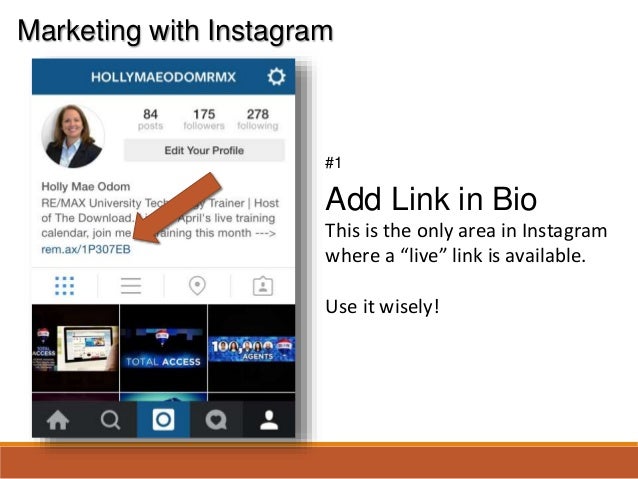
Instagram does not currently allow clickable links in organic posts. You can include a link in your caption or message, but the recipient has to copy and paste it into their browser or visit the link in your Instagram bio. With Instagram advertising, you can include outside links, which enables you to designate a destination URL to your website or another external URL. To be able to better track website traffic from your Instagram Ads, it’s recommended to use your own domain as you should have your Pixel implemented there, whereas you may not have it on other website URLs that you don’t control.
Instagram Feed and Explore video can be up to 60 seconds in duration and while Stories are typically up to 15 seconds in duration, if you run ads in these three ad placements, you can have up to 2 minutes of video content. This gives you more opportunity to convey both your brand and the features and benefits of your offer through your products and/or services.
Let’s take a look at the average cost per click, cost per engagement, and cost per thousand impressions on Instagram.
For all metrics, Instagram cost per click in 2021 ranges from $0.40-$0.70. This takes into account all clicks that happen on an ad, which includes not only link clicks, but likes/reactions, comments, and shares.
For ads that have a destination URL, Instagram cost per click in 2021 ranges from $0.50-$0.95.
Instagram cost per engagement in 2021 ranges from $0.01-0.05.
Instagram cost per one thousand impressions in 2021 ranges between $2.50-$3.50 for better-performing campaigns and their respective ad sets.
When it comes to CPMs, our findings show that Facebook tends to be higher than Instagram, by nearly 2x but CPCs tend to be lower by nearly half on Facebook compared to Instagram.
Image via AdEspresso
While Facebook and Instagram advertising work using the same Ads Manager, their respective advertising costs vary (see how much it costs to advertise on Facebook in 2021 here). With Facebook being around longer, having more data, and more ad placements compared to its younger adopted sibling platform, we do find that more often than not, Instagram is slightly more expensive than Facebook in some instances.
While that is the case, don’t let it deter you from exploring this lucrative and effective visual counterpart in the Facebook ecosystem. With fewer ad placements and increased competition for impression share, you may pay slightly more to use Instagram, but you may also pleasantly see it being much more cost-effective than the results you’re getting with Facebook.
Similar to other platforms, Instagram ad pricing is influenced by a number of variables.
Campaign objectives can cause your advertising costs to be automatically higher or lower, depending on which you choose and how it relates to where your target audience is in the funnel.
For example, if you select a brand awareness campaign objective, it will be lower in cost than something lower down the funnel and that has a higher value objective, such as conversions. Having broader, colder audiences see your ad to drive brand awareness is a lower-value action compared to targeting a user further down funnel—who are more familiar with your brand and offerings, and ready to open their wallet or take a higher-value action.
If you are targeting broader audiences, they are typically lower in cost as there is less competition for a group of people. As you narrow your audiences, perhaps by reducing their geotargeting or age ranges, you may see the price go up as competition for those eyeballs increases in parallel. Retargeting audiences are typically smaller as well, hence why we often see higher costs in retargeting campaigns.
Budget also influences Instagram ad costs because if you have a small budget, it may take longer to get out of the Learning Phase if your campaign or ad set is starting anew. Costs may be more expensive at first before the system learns and understands your campaign type and optimization goals, and how your audience engages with your ads. If your ads are well engaged with, Facebook and Instagram will reward you with lower costs over time.
If CTR is low, then we may see higher costs as the system thinks there may be some disconnect between your target audience and what you’re messaging in your ads. You want your ads to resonate with your target audience and CTR Is a strong indicator of that. Aim for a healthy CTR which is about 2%. If you have a healthy CTR, you should see your costs decrease.
Make the most of your budget by selecting funnel-appropriate campaign objectives to start. If you are targeting colder, broader, prospecting audiences, test less expensive campaigns to introduce your brand to audiences with an awareness, engagement, or better yet, a website traffic campaign so that these users leave Instagram and get to your website and tagged with the Pixel so you can later retarget them if they don’t convert on that first click. If you’re new to Instagram Ads, you can drive sales from the first interaction and click, but more often than not, users will need to have several interactions with your brands in order to develop trust, perhaps do some shopping and comparing, and then come back to you through retargeting or other means to open up their wallets. If you have a low-cost product that doesn’t need much research, impulse buys can be successful from Instagram.
Another way to lower your Instagram costs is to use automatic placements in the ad set level and serve across both Facebook and Instagram. By having more placement liquidity, the system can use its algorithm to determine where to best serve your ads, thus giving them more options across both platforms and more ad placements, thus, lowering competition on Instagram’s three current ad placements, thus lowering your costs.
You will also want to test audiences with different ad variations by testing the different lines of ad copy and creatives – images and videos. By running tests, you can learn what resonates with your audiences and it can help improve your engagement rates and CTR, thus, also helping lower your costs and making your budget go further.
Instagram continues to grow and the advertising options only become more robust. It’s not yet saturated and it’s safe to assume that more ad placements will come our way.
Give Instagram Ads a test and see how it fairs in comparison to Facebook Ads and other advertising platforms you may be running on. It may end up being an important part of your funnel by driving more brand awareness and engagement or it may end up bringing a primary source of revenue.
Want more cost information? Check out similar posts:
Even though Facebook and Instagram ads are set up using the same Ads Manager control center, the advertising costs differ on these social networks. Because Facebook has been around longer, has more data and more ad space than its younger sibling, Instagram will indeed cost a bit more in some cases. But this fact should by no means be a reason to refuse to explore the possibilities of such an attractive and effective application that perfectly complements the Facebook ecosystem. Using Instagram may be slightly more costly due to fewer ad spaces and increased competition for impression share, but in terms of overall performance, it can also significantly outperform Facebook.
Paid advertising on Instagram is a powerful marketing tool that complements the ability of companies to fill the feed, stories and "Interesting" section.
As the platform matures and the need for more impressions arises, ads may well be added to the Reels and InstaGram TV services.
Advertising on Instagram, just like on Facebook, has flexible settings and advanced targeting functions, which makes it available for almost any business. If this visual platform is popular among a certain target audience, then you should think about placing ads there. To help guide you, the following questions will be discussed below:
Depending on the purpose of the campaign, advertising broadcast on Instagram can:
You don't even need an account. Since the service is owned by Facebook Inc, the only thing required is a Facebook business page. However, the benefit of having an Instagram account is still there: thanks to it, it will be possible to get acquainted with the content that best suits the preferences of the target audience, as well as complement and improve the marketing efforts undertaken.
Use the Ads Manager tool to configure your future ads. With it, you can set up advertising campaigns, ad groups, for which you can specify the size of the budget, select the target audience, ad placements, and optimization options.
As with Facebook, Instagram ads will perform according to your chosen time frame, budget, audience, and optimization goals.
Social media advertising is very useful, in particular the payment for advertising impressions on Instagram, which is especially beneficial compared to the usual running of campaigns or promotions directly from the organization's account.
With a monthly audience of over 1 billion users, Instagram is second only to Facebook. Both platforms have an incredibly powerful arsenal of targeting data, and since Instagram is part of Facebook, Instagram ads take full advantage of a combined array of demographic and geographic statistics. Facebook ads are highly effective precisely because of advanced targeting, which provides the opportunity for fine-tuning when focusing on different consumer audiences. Whether used:
One of the factors behind Instagram's popularity is its high engagement rate, both organic and through paid advertising.
Images posted on Instagram get 23% more attention on average than on Facebook.
In terms of organic engagement, Facebook has almost no organic reach, while the content of large companies that are present on Instagram is regularly viewed by about 4% of followers. While it's better than nothing, it's a smart move to invest more in paid advertising to increase your visibility and reach. Decent results can be achieved using any form of visual content, but video advertising is more attractive in terms of engagement (by about 38%) for many businesses. Images and videos that form the visual basis of Instagram are much more effective in attracting attention compared to platforms degrees focused on textual representation of information.
Instagram does not currently support hyperlinks in regular posts. You can include the link in the header or body of the message, but the recipient must manually copy and paste it into their browser or follow the link in the profile description. When you connect paid advertising, you can add external links, which allows you to specify a specific website or other external URL as the target address. To be able to better track conversions from Instagram ads, it is recommended that you use your own site with a pre-configured Facebook Pixel, as it may not be available on third-party sites.
Videos can be up to 60 seconds long in the feed and Explore tab, and up to 15 seconds in story mode. Accordingly, if advertising is launched in all these places at once, then in total you can get up to 2 minutes of video content. This gives more opportunities to present not only the brand itself, but the features and benefits of the offer through a visual presentation of products and / or services.
If there is a target URL, the cost per conversion for the Link Clicks metric will range from $0.50 to $0.95.
The CPC for the "Clicks (all)" metric is slightly lower, ranging from $0.40 to $0.70.
This metric takes into account all clicks on an ad, including not only clicks, but also likes, reactions, comments and reposts. In terms of cost per thousand impressions (CPM), starting January 1, 2021, you will need to spend at least $2.50 - $3.50 to run the most effective campaigns with eligible ad sets. Engagement costs will be $0.01 - $0.05.
The data also shows that CPMs on Facebook are almost 2 times higher than on Instagram, while CPCs are typically half as much.
Instagram ad pricing, like other platforms, depends on a number of variables. The costs can vary significantly depending on what is chosen as the goal of the advertising campaign, and how this goal correlates with the position that the target audience occupies in the sales funnel. If the goal of the campaign is to increase brand awareness, then it will cost less than the action located lower in the funnel and, accordingly, with more value (for example, conversions). Showing ads to a wide and cold audience to better educate them about the brand will be less valuable than when a certain number of potential customers familiar with the product and offers have already moved closer to the bottom of the funnel. These people are willing to shell out or take a higher value action in a retargeting-focused conversion campaign that can be optimized for purchases.
Other variables that play a role in determining advertising prices include audience size. Reaching a wider audience will generally be cheaper as there is less competition for groups of people. And vice versa, as the audience narrows, for example, due to the clarification of geotargeting parameters or age limits, the price will grow in parallel with the increase in competition for its representatives. Retargeting audiences are usually small too, which is why retargeting campaigns often come with higher costs.
Pricing is also affected by the size of the budget. If it is small, and the advertising campaign or ad set is launched from scratch, then the exit from the learning phase may be delayed. At first, until the system learns and understands the type of campaign, optimization goals, and how the audience reacts to advertising, the cost of advertising can be higher. If the ads are attractive enough, Facebook and Instagram will reward you with smaller ads over time.
Click-through rate (CTR) can be significant. If it is low, the cost may be higher because the system will assume that there is some mismatch between the content of the ads and the target audience. CTR is a reliable indicator of the extent to which an ad resonates with its target audience.
Approximately 2% is considered a normal CTR level, the achievement of which will allow counting on cost reduction.
For the most efficient use of the budget, the first step is to determine the goals of the advertising campaign, which will be in line with the sales funnel. If the intent is to target a colder, broader audience, start with less expensive campaigns to provide more exposure to those potential customers who are already aware of or interested in the brand. Better yet, test your website traffic campaign to get those users to visit your site from Instagram and be registered with the Facebook Pixel tool. This will provide an opportunity for their subsequent retargeting if the conversion does not occur at the previous stage. More often than not, users need to make several interactions with products, perhaps buy something and compare with competitors' offerings, before they have enough trust in the brand. Subsequently, these people will come back to you through retargeting or other means to finally make a purchase. Impulse buying can be successful if you sell an inexpensive product that does not require much market research.
Another way to reduce costs is to use the automatic placement option in your Facebook and Instagram ad settings. With a wide margin for maneuver, the system can use its own algorithm to determine where it is best to place ads. The result is an increase in both the total number of options available across both platforms and the volume of ad impressions, reducing competition across three of Instagram's current ad placements (Feed, Stories, and Explore) and lowering costs.
It makes sense to try different variations of ad copy and visual ads in the form of images and videos. This will help you understand what resonates with your audience, as well as improve engagement and CTR, which in turn will help reduce costs and increase your budget.
The Instagram app continues to grow, and the opportunities for advertising in it become more and more functional. It is not yet saturated, and it is safe to assume that soon (hopefully this year) there will be more places to accommodate it. Try Instagram ads, compare them with ads on Facebook and other platforms. By driving brand engagement and awareness, it can become an important part of your sales funnel or even a major source of income.
The original text is available on the WordStream portal
Still have questions? We will analyze a simple task for free or we will conduct a consultation
Engage your audience with content
Instagram is a global social network, which, according to marketers, is the best platform for brand promotion.
Creating and promoting a business profile on Instagram solves several problems at once.
First, you reach a young audience that actively uses mobile gadgets and likes to shop online. Secondly, you improve the company's image through informal communication with users. Thirdly, unobtrusively, but constantly present in the daily lives of your customers, which makes it possible to advertise and sell goods.
We use modern methods of promotion on Instagram, the price of the package includes all the necessary services for the comprehensive promotion of your profile.
Popularity of social network Instagram
500 million users daily use Instagram
Why a company should be represented on Instagram
Benefits of promoting on Instagram in Minsk
Huge reach
The social network has more than 1 billion active accounts, and their number is constantly growing
A solvent audience
Most of the users are people aged 18 to 34 (61% of the total)
Advertising loyalty
According to statistics, 80% of Instagram users are subscribed to at least one business account
Interest in brands
70% of users searched for brands on the social network, and 60% found out about new products and services through Instagram
Awareness growth
Your profile not only subscribers see, 2/3 of the total number of visits are accounted for by guests
Effective tools
You can successfully promote yourself on Instagram using free and paid tools
How much does promotion on Instagram cost (* - advertising budget is paid separately) 575 rub/month
Market analysis, strategy development
Creating, setting up and designing a community
Selection and publication of 10 posts (per month)
Development and publication of up to 10 stories (per month)
Development and publication of up to 3 urgent and situational posts
Setting up and maintaining targeted advertising
Reporting
Holding up to one promotion or contest
Order
Optimum
825 rub/month
Market analysis, strategy development
Creating, setting up and designing a community
Selection and publication of 20 posts (per month)
Development and publication of up to 20 stories (per month)
Development and publication of up to 5 urgent and situational posts
Setting up and maintaining targeted advertising
Reporting
Holding up to 2 promotions or contests
Selection of bloggers for collaboration*
Order
Business
1150 rub/month
Market analysis, strategy development
Creating, setting up and designing a community
Selection and publication of 50 posts (per month)
Development and publication of up to 30 stories (per month)
Development and publication of up to 10 urgent and situational posts
Setting up and maintaining targeted advertising
Reporting
Holding up to 3 promotions or contests
Selection of bloggers for collaboration*
Selection of popular advertising platforms*
Comment processing
Community Site Integration (SMO)
Photographer 1 hour (per month)
Order
Creation and benefits of Instagram business accounts
What is the difference between business profiles and ordinary ones?
To create an account for solving commercial tasks, you need to link to a Facebook page.
Business profiles have several advantages over regular profiles.
First, you will get advanced statistics, including the number of views, engagement and audience structure. This data is used to track the effectiveness of the promotion. Secondly, only if you have a business account, you can run targeted advertising on Instagram. Thirdly, you will be able to add on the page buttons "Getting there", "Call" and "Send e-mail. letter".
OrderHow we will work on your account
Stages of promoting an Instagram account by an agency
Analysis of the target audience and competitors
We analyze the features of your business: market niche, product characteristics, client profile. Then we evaluate the work of the closest competitors - how the Instagram account is maintained, which posts get more comments, which tools have shown their effectiveness.
The collected information is used to form a unique selling proposition (USP) and draw up a content plan.
And when developing an Instagram promotion strategy in Minsk, we rely on the habits and interests of the target audience.
Drawing up a content plan and writing posts
We decide how often posts will be posted on your page - optimally 1-2 times a day, so as not to annoy subscribers, but also not to lose contact with them. In addition, we determine when the target audience is most active in order to schedule publications for this time.
We draw up a content plan, write posts in accordance with it. When preparing texts and selecting hashtags, we take into account the language spoken by the target audience. The presentation of information depends on the gender, age and interests of subscribers.
Creation and visual design of the page
We develop design for profile elements: avatars, covers of eternal Stories, design of pictures and photos in posts. We determine in what style we will create videos and stories, what filters to apply to photos.
Create a business profile on Instagram, set up and fill in information about the company in the header.
We immediately start publishing posts in accordance with the content plan. If you already have an account, we will update its description and content.
Attracting subscribers and working on engagement
An SMM specialist regularly publishes posts and stories, monitors user reactions and adjusts the content plan. Tracks popular hashtags and trends to create interesting content that can get to the top and recommendations.
Organizes contests with prizes to quickly increase the number of subscribers. Announces promotions and sales, encourages visitors to leave comments and save posts, sets up targeted advertising in agreement with you, and uses other tools to keep subscribers interested. We use only official Instagram promotion methods in Belarus, no black cheats or spam.
Personal communication with subscribers
We moderate comments, if necessary, we block users who violate the rules. We track negative reviews under the posts and work through the negative as quickly as possible.
![]()