Feature
We look at how much of your data plan gets used by the Facebook app
By Martyn Casserly
Contributor, Tech Advisor
Foundry
Facebook has always worked hard to be ‘sticky’. Like all social media, once you open the Facebook app, you’re stuck there for a while as the constant stream of comments, photos, videos and polls make it hard to put your phone down and go back to your normal life. But, how much does this cost you in terms of mobile data?
To test this out, we reset our test phone’s data usage counter to zero (in a dedicated monitoring app) and it told us that 5 minutes of being on the Facebook app resulted in around 40MB of data being consumed.
If we extrapolate this figure to different timescales, we get the following:
As you can see, this means that an hour a day of using Facebook on your smartphone could cost you around half a gigabyte of data. Over a week this amounts to around 3.5GB (500 x 7) and across a month you’ll be in the region of 14GB. Combine this with the slightly higher figures we found when doing a similar test on how much data Instagram uses and you could easily be hitting your data limit just from those two apps alone.
If you think that the figures outlined above are a bit steep, there are some settings you can tweak in the app that will bring them down. These include preventing videos from automatically playing and lowering their resolution, so they use less data.
Here’s how to find the Mobile data use settings:
Open the Facebook app and tap on the Menu icon in the bottom right corner
Scroll down and select Settings & Privacy
Scroll down again and tap Mobile data use
Foundry
Now you can select whether you want lower-resolution video and when autoplay works.
Foundry
Of course, another simple way to reduce the amount of data Facebook uses is to only access the app when you’re on a Wi-Fi network, as this won’t use any of your data plan. If your current contract is too restrictive, try looking at our roundups of the best phone networks and best pay-as-you-go networks to see if you can get a better deal.
Martyn has been involved with tech ever since the arrival of his ZX Spectrum back in the early 80s. He covers iOS, Android, Windows and macOS, writing tutorials, buying guides and reviews for Macworld and its sister site Tech Advisor.
Overage charges. Like parking tickets and Sean Hannity, they’re one of those annoyances in life that we try to avoid. One way you can avoid overage charges on your bill is to limit data usage by apps like Facebook, which is one of the hungriest apps on your phone.
Normal use of the Facebook app—browsing your News Feed and looking at photos—consumes about 1. 5MB per minute. Watching videos on Facebook uses around 2.6MB per minute. Spend 45 minutes a day on the Facebook app and it’ll cost you over 2GB of data in a month, which does not include the data the app drains while it runs in the background.
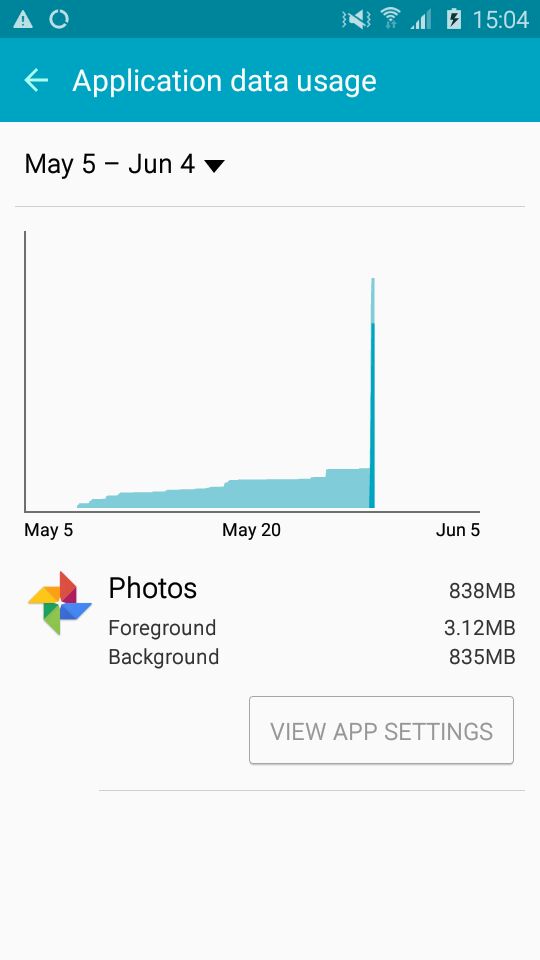
Here’s how to see exactly how much data the Facebook app is using on your phone. On your Android device, open Settings and select Data usage. You’ll see a graph that shows your monthly data usage and, below the graph, data usage by Facebook and other apps. On your iPhone or iPad, open Settings and select Cellular. Scroll down to view your data usage and scroll down a bit more to see data usage by Facebook and other apps.
1. Stop videos from playing automatically in your News Feed
You can adjust your Facebook app’s autoplay settings to On, WiFi only or Off. If you choose WiFi only or Off, you’ll use less data.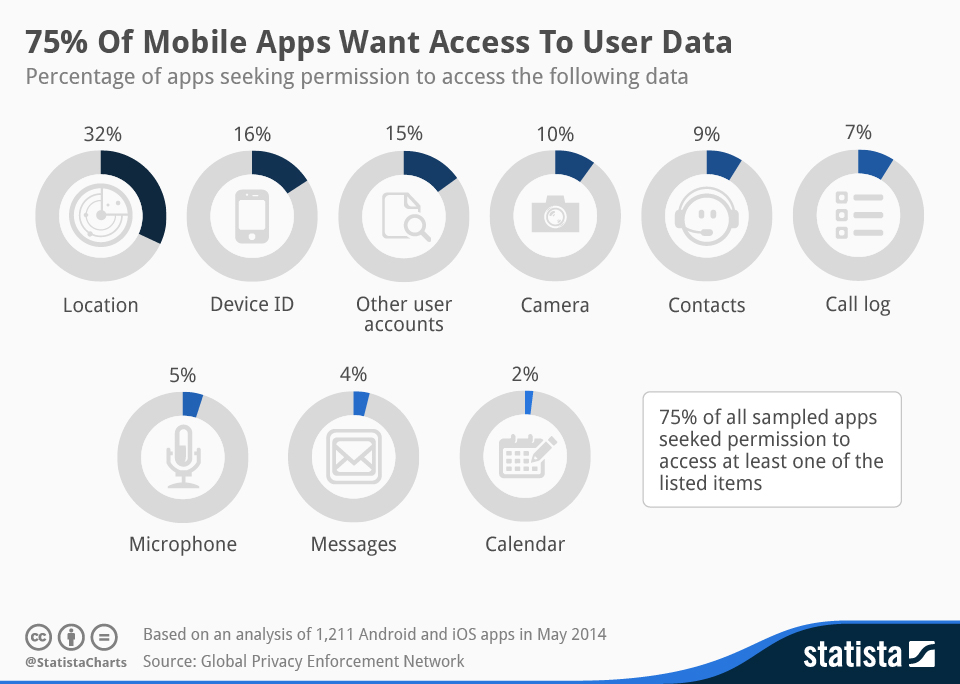
(If you don’t see the Autoplay setting on your Android device, log out of the Facebook app. When you log back in, Autoplay should be visible in App settings.)
Facebook Lite is a slimmed-down app developed to provide a more data-efficient Facebook experience. It uses over 90% less space on your phone, as well as less RAM and less CPU. It also uses considerably less data than the full-fledged app—yet it offers almost all the same features. The primary difference is the simplified interface.
You can download Facebook Lite to your Android device from the Google Play Store. There is not yet a version for iPhone or iPad.
3. Use WiFi whenever possible
This advice applies to all the apps on your phone. Using WiFi instead of mobile data will, obviously, save you a lot of data. Just go to Settings, tap WiFi and turn it on.
It's no secret that Facebook consumes a lot of mobile Internet traffic. It is leading among other applications. This is not a simple statement, there is evidence that has been obtained in practice. Let's analyze this question in more detail.
Contents:
The official Facebook application consumes Internet traffic in the range of 2.1-13.9 Mb per hour of active use. The calculations also took into account the functionality of voice communication and sending texts.
Features of automatic playback:
There are several reasons:
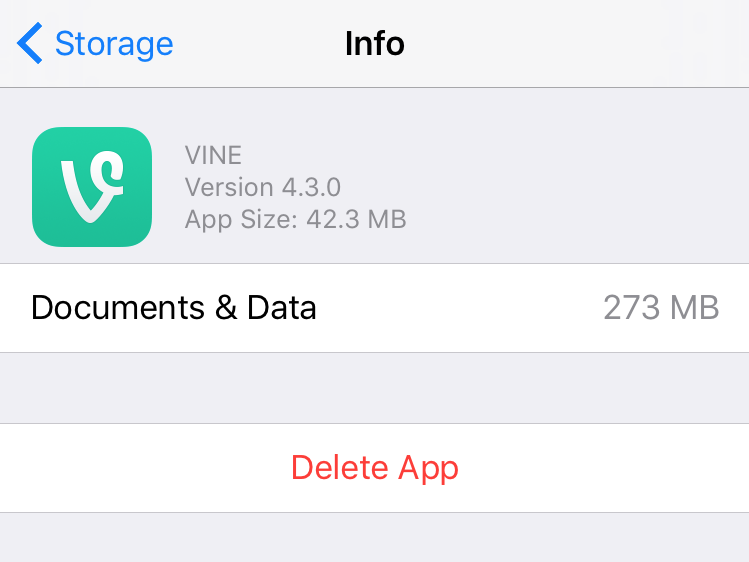 This is not a bad way to make a profit;
This procedure is not difficult. It is enough to perform the following steps.
For iOS:
There are several ways to reduce traffic consumption.
Install the official light version of the application on your smartphone. It spends 10 times less traffic.
Adhere to the policy of not watching videos on your smartphone through the Facebook app. It is better to log into your account through the Google Chrome browser. This is great for saving internet.
Disable video autoplay/download. In the phone settings, the format is auto by default.
Disable automatic application updates.
Facebook consumes a significant amount of traffic in the background. Using the dedicated Hyberbation Manager program, you can forcibly deactivate this feature.
Turn off automatic updates in the smartphone settings that are active. For example, Google Play Store.
Perform data compression.
The above examples are designed to reduce the overall Internet consumption on a mobile device.
To save bandwidth, it's best to disable this feature.
Instructions:
Videos will no longer play in your News Feed.
Just follow these steps:
Procedure:
Important! Owners of some versions of iPhones should be prepared for the fact that the automatic launch section will be missing.
Now you know how to reduce your application's traffic consumption. This will save internet on your mobile device.
Facebook is one of the most popular applications for smartphones. However, recently the company has been hit by a lot of accusations in connection with the incorrect use of personal data. But in this flow of information, the message that the social network application is extremely irrational in spending traffic (and, as a result, “killing” the battery) went unnoticed. And something needs to be done about it. And we have an answer for what it is.
There are several ways to reduce traffic consumption. Let's start in order.
This is the first step you should take if you're worried that Facebook is eating too much data. If you're sharing a lot of photos and videos on Facebook, and you're constantly seeing videos flickering through your feed, the video auto-play feature may be causing your bandwidth drain. To set it up, you need to do the following:
Facebook for Android also has a built-in data saver that reduces the size of images and optimizes them for your device's screen.
Go to the settings menu and find the "Settings and privacy" item. There will be an item "Data Saving". He is what we need. In this case, you can make sure that this option is disabled when using Wi-Fi.
This is perhaps the most radical way to save traffic. Facebook Lite is a lite version of the Facebook app that has only the most important features (including limiting the amount of incoming and outgoing data). The problem is that Facebook Lite is not available in all regions, but you can always download the APK file from third-party repositories.
How often do you use the Facebook app? Share your experience in our Telegram chat.
Longrids for you
IPHONE 14. Why so
Apple has introduced the iPhone 14 line that many have been waiting for. True, this year the company decided to separate the basic smartphones from the Pro version by installing different processors in them. So, ordinary iPhones received last year's A15 Bionic, so many fans considered the smartphone to be outright junk, and the very fact of its release was a real mockery on the part of Apple. Oh, these would be problems for owners of Android smartphones who frantically choose a phone in the hope that its processor will not start to blunt in a year. In this article, we will explain why an iPhone with an old processor is better than any Android smartphone.
Read more
How to connect your smartphone to your computer. Overview of the Link to Windows app
When I switched from Windows to Mac in 2012, I had no idea that I would be back ten years later. And so life turned in such a way that I urgently had to buy a laptop on the Windows 11 operating system. Given the fact that for many years working on an iMac and using it in conjunction with an iPhone and iPad, I was spoiled for perfect synchronization, I had to wonder how In this way, I can link my main Android smartphone to my computer to access all my photos, messages and calls with one touch.