Viber is one of the most popular instant messaging apps in the world, available for all major mobile devices and operating systems. Viber has been offering free call and messaging services to mobile users for over a decade now, and the company's business model has not changed. All you need to make a call or send a text, image, or video is access to the internet. By going through the extensive catalog of Viber statistics listed below, you'll be able to better understand the company as well as its journey to fame.
No tech company is considered a serious player unless it has achieved the significant milestone of reaching a billion users. Viber user statistics point to 1.169 billion registered users on the messaging app, as of March 2020.
(Statista)
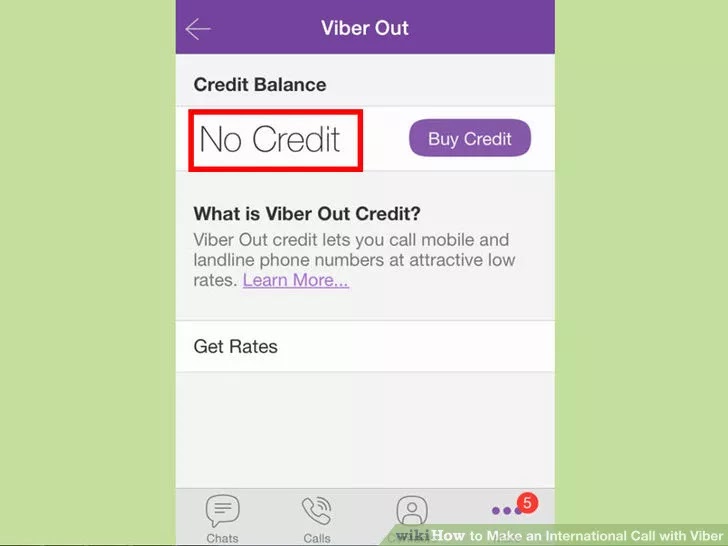
An important factor that separates Viber from other popular services requiring only an internet connection for communication is their Viber Out subscription plan. Users can buy credit as a cheaper alternative to regular international calls or choose a subscription plan. Prices vary worldwide for both rates per minute and different international monthly plans.
(Viber)
The latest Viber user statistics point to a vast majority of users being active every month — 823 million. The service doesn't require a SIM card, so it can be used on various devices.
(Versus)
When it comes to the volume of messages an average user sends daily, the company reports its users are actively engaged. The minimum of 30 messages daily also implies that typical Viber users access the app at least several times a day. That's why top social media marketers wisely leverage the power of Viber's user base and their active behavior.
(Viber)
A typical user visits the app or its desktop version several times per day. The company analyzed and reported several aspects of user behavior. Viber user statistics point to over 35 minutes spent daily on the platform.
(Viber)
Viber's data storage centers are under constant supervision, as there are over a million interactions happening every minute on the network. Viber users are continually sending messages, photos, and videos, also expecting to receive some back. As video is the most engaging form of content, with a little help from quality video production companies, brands can successfully expand their promotional activities in direct communication.
(Viber)
Viber statistics show there were 23.2 million visits on desktop and mobile web between February 2022 and April 2022. The data excludes traffic from the app. The average number of pages per visit was calculated at 1.98. For desktop devices only, 42.18% of traffic comes from a direct source, while Search takes second place at almost 42%. Referrals and Social account for 7. 53% and 6.29%, while the Mail and Display categories seem quite irrelevant by comparison, with 1.81% and 0.2%.
(SimilarWeb)
Since the latest addition of Kurdish at the beginning of 2021, Viber has been supporting 41 languages. The latest addition is available only on Android devices so far. This move was also relevant in another way, bordering with political issues, as the Viber messenger app is the first major international company to include the historically oppressed nation's native language on the platform. All leading market research experts know just how essential it is to reach a certain target market in their native language.
(Kurdistan 24)
One of Viber’s latest features is the platform’s ability to use chatbots for making purchases. Viber chat statistics show that as of November 2020, chatbots in Ukraine can safely process payments, and the company plans to expand it to other markets as well. The feature directly connects users to their Google or Apple Pay accounts for a hassle-free process. Viber doesn't have access to users' payment information, but rather serves as a mediator.
(Viber)
Viber certainly took a different route than rivals in terms of revenue sources. While some services get most from paid ads shown to targeted users as sponsored content, Viber facts show its two primary revenue sources are its Business API and paid in-app purchases, each accounting for 40% of the total revenue. Businesses have a monthly fee to be approved as official and able to communicate with their subscribers. There's a sign displayed on verified profiles — a little green V in the corner.
(TNW)
2021 data shows 20% of the company revenue is generated through in-app ad placements. Since the service is encrypted, the only data Viber will reveal about its users are the IP-based location, gender, and age. There's even an option for excluding the latter two, and in that case, only non-targeted ads are shown to those users.
(TNW)
Viber statistics show there are 3 format options if you wish to advertise your brand on Viber instant messaging and calling platform. Brands can choose between the following types of ads:
These ads are non-intrusive, and different placement options are there to suit your target audience. Raising your brand awareness and driving engagement levels are just some of the expected results.
(Viber)
The delivery rate is an important aspect of a one-on-one marketing strategy for a business. Viber boasts a whopping 97% of delivered messages here. Brands can track the percentage of seen messages, and it is reported at 89%. For boosting your conversion rate, you should note the average CTR for links is 82%, according to Viber statistics.
(Messaggio)
An advantage of the service is that users are free to choose the device on both Android and iOS. It is required to have a mobile app on your smartphone to install the desktop version, but once you set it up, you can freely use it on Windows, Mac, and Linux.
(Viber)
Born in Israel, the founder of Viber, Talmon Marco, spent his mandatory military service as a Chief Information Officer (CIO) for the Israel Defense Forces, according to Viber facts. After serving in the military, he graduated from Tel-Aviv University and moved to the US, where he lives today. Viber was not the first company Marco started; file-sharing service iMesh was among the previous ones.
(TNW, Fandom)
Viber statistics reveal that until the company introduced its Sticker Market and Viber Out in 2013, there wasn't any source of revenue. The original funding was said to be from Marco's friends and family, and even in 2013, the company reported a loss of $29.5 million. The Viber net worth was never publicly revealed, and only estimates can be made. The only official financial report available is that of Rakuten Group's mobile revenue. In 2020, the total was $1.36 billion.
(Statista, Financial Times)
Viber facts show the beta version of Viber was available for download for the first time in 2012. Viber was initially launched for the iPhone in 2010. Its first presence was on BlackBerry and Windows Phone in 2012. Later that year, it made it to the Android platform.
(Wikipedia)
Rakuten, the Japanese ecommerce and internet services group, decided to spend $900 million and buy Viber. The acquisition went public on February 13, 2014. Rakuten is the largest ecommerce website in Asia.
(BBC)
Another essential feature making Viber a safe space, which attracted a large number of users, is the end-to-end encryption as a default setting.
(Forbes)
When it comes to keeping up to date with the latest trends, Viber's usually on top of the game. Since platforms like Snapchat popularized the disappearing messaging system in the early 2010s, user expectations of the social media landscape have been changed. The option of disappearing messages has been available since 2017. The view time can be set to 1, 3, 7, or 10 seconds, after which the message can't be seen again.
(TechCrunch)
The notion of the new normal meant the increase in digital interactions for many purposes besides socializing, including education and work-related activities.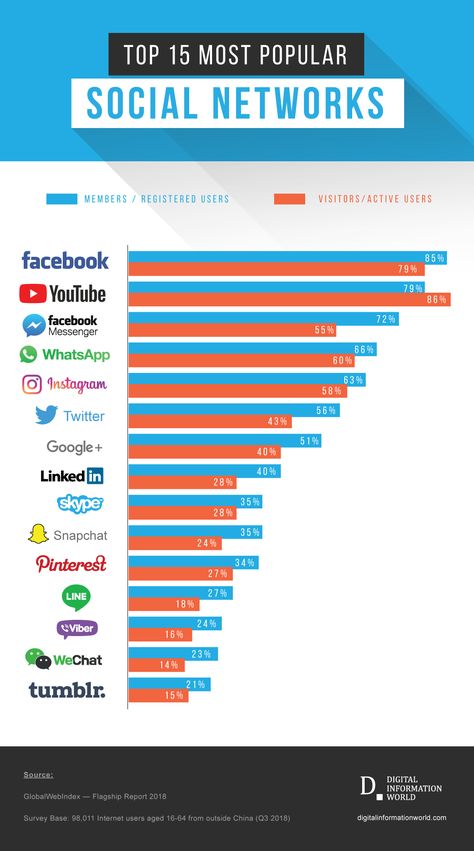 Viber saw an increase in group-related activities of a stunning 170% in 2020. Communities, calls, and chats were all included in the report.
(Viber)
In 2019, Viber introduced the option of group calls. The most recent feature was enabled as a response to the pandemic and a celebration of the platform's 10th birthday. Since 2020, Viber users have been able to engage in group video calls.
(Viber)
The pandemic spurred an unseen increase in group calls for business and educational purposes. Viber group statistics reveal the company appropriately responded by doubling the previous limit of 10 participants per call.
(Mobile Marketing)
As social distancing measures started impacting many aspects of education at all levels, the company started introducing some features to ease the challenges both educators and students had encountered for the first time.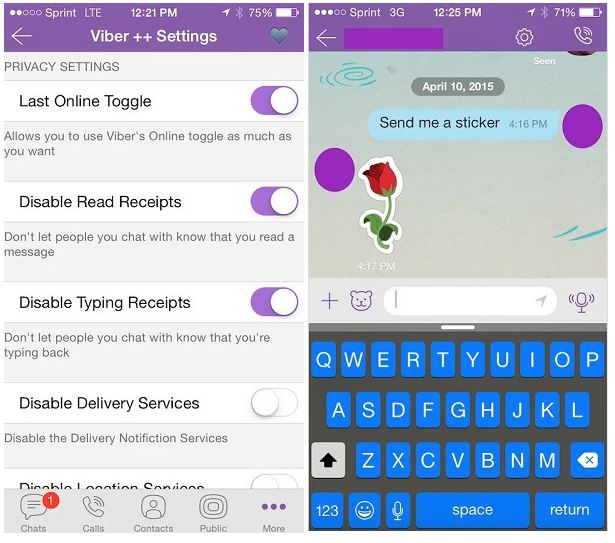 An online survey of teachers using Viber instant messaging in Hungary showed that 60% of them were using it for communication with:
(Statista)
By examining the increase of Viber users by country, significant growth has been reported in the Philippines. The company's effort to provide a top-notch service resulted in a 24% growth of users in this area. Viber chat statistics point to a YoY increase of 31% in the volume of messages sent. As for the calls made, an increase was 41%. Communities were especially popular in 2020, with a jump to 198% of users who viewed said content.
(Manila Bulletin)
As of December 2020, Viber is an official partner in the campaign that advocates for positive change in social media usage among the youth in Myanmar. U-Report was launched in 2016 with the main goal of helping to combat misinformation and provide reliable information sources for young people. Viber's participation was a significant event in the campaign, and the latest data points to over 50,000 registered U-reporters on the platform.
(UNICEF)
The International Federation of Red Cross has collaborated several times with Viber so far, the first time encouraging people to give blood during the campaign. Viber group statistics show IFRC's Community quickly gained over 160,000 members. Croatian Red Cross signed a partnership deal with the company in September 2020. The mutual goal was to provide reliable COVID-19 information and share humanitarian stories to inspire online audiences worldwide.
(IFRC)
The latest data for Viber users by country points to Ukraine having the highest penetration rate among the Android users. Viber user statistics from September 2021 reveal a whopping 97.9% of Android users had the app installed.
(Statista, Open 4 Business)
The latest data shows WhatsApp is the most popular messaging app in Russia, with 76.83 million active users on the platform. Telegram comes in second with 37.88 million users, and scoring third place, the number of Viber monthly active users in Russia is 34.84 million.
(Statista)
Viber was already the most popular messaging app in the Asia-Pacific region, and the pandemic greatly accelerated the acceptance rate. A massive surge of a whopping 421% in Viber users was reported for 2020. Viber chat statistics for the same region and period point to a 509% growth in the volume of messages.
(Myanmar Times)

Stickers and Graphics Interchange Formats have expanded the possibilities for users to express themselves. The two are vital aspects of 21st-century popular culture among users of all ages. Not only can they share GIFs on Viber, but create their own as well. An endless loop and playing in reverse have also been available since 2020.
(Viber)
As a response to hate speech that wasn't removed from Facebook quickly enough, Viber pulled all its advertisements from the platform, Viber facts show. Many companies, including Verizon, have joined the movement called Stop Hate For Profit and paused advertising on Facebook.
(Mobile Marketing)
The end-to-end encryption implies not even the company can access your conversations. They can be stored on the server just until delivered to the recipient. As soon as the status is “delivered”, the data immediately gets deleted from the server.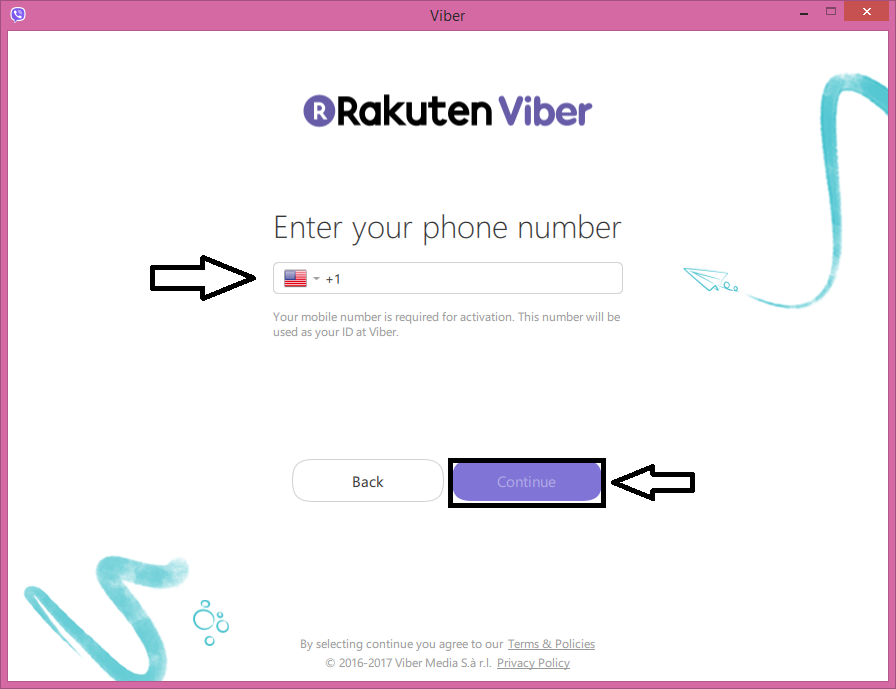
(Viber)
The main difference between a group and a community on Viber is the total number of members. Public groups or communities aren't end-to-end encrypted, and users must receive an invite to join a group. Viber group statistics further show the limit is 250 members. When it comes to communities, everyone can freely join. The only limit is the actual number of Viber users.
(Viber)
Another pretty convenient option for users who want to transfer the data from the app to their email address is available on Viber. This fact is important as the total number of Viber users can back up all of their data. It can be useful in cases such as damaged or lost devices, etc.
(Versus)
One of the popularity measures for virtually anything, especially brands, is the number of accounts that follow the official page on the dominating social network.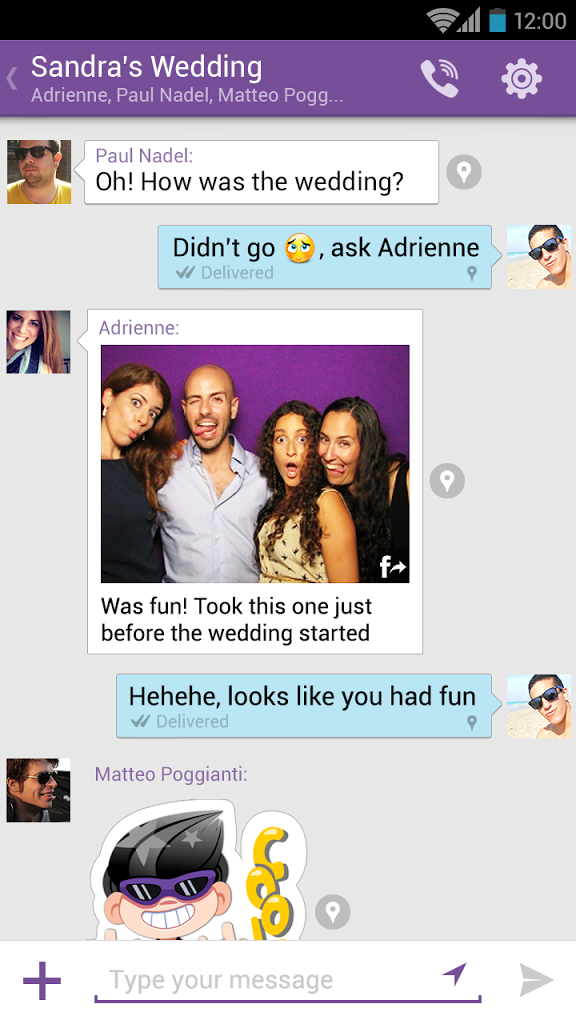 Despite Viber breaking its business ties with Facebook in 2020, its page is active and keeps a strong community of almost 9.3 million users (May 2022).
(Facebook)
Viber's YouTube channel has been up and running since 2010. As of May 2022, there are over 115k subscribers. The company delivers tutorials, news about the updates, etc., to a large number of Viber users who are following the channel. Viber statistics for the videos point to over 211 million views.
(YouTube)
Since Rakuten's acquired Viber, the official headquarters are in Luxembourg. The company was originally registered in Cyprus, but the development and research centers were operating in Israel and Belarus as well.
(Wikipedia)
As of 2014, the Viber messenger app is owned by Rakuten, a Japanese ecommerce giant and financial service company.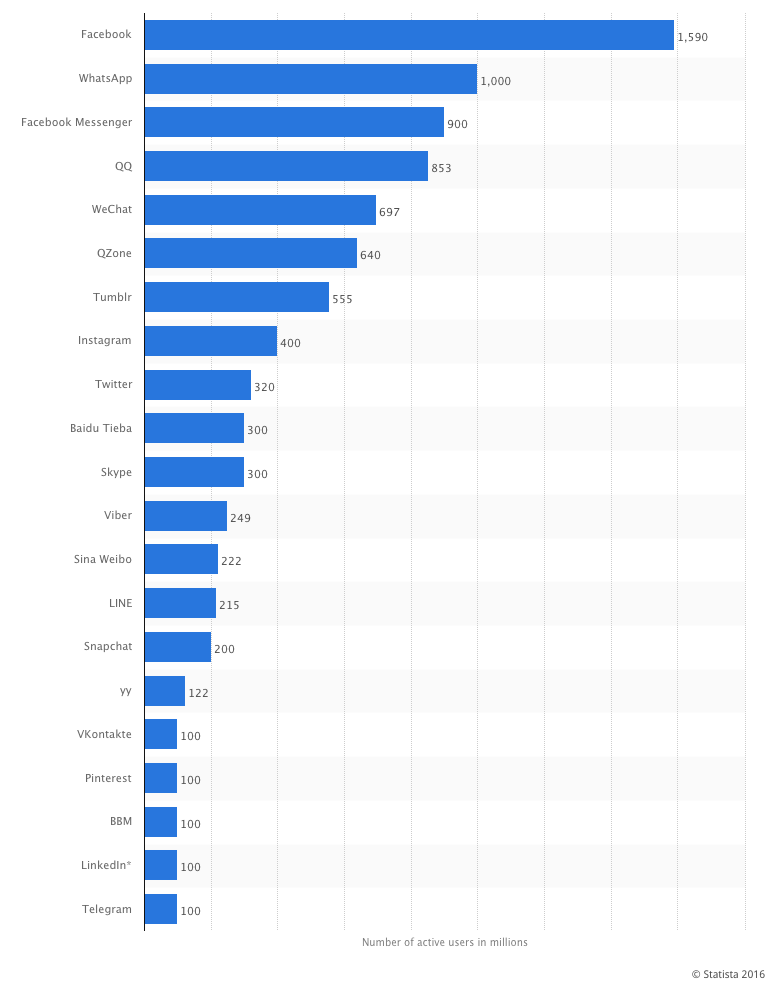 They have acquired the cross-messaging service for $900 million.
(BBC)
Viber statistics show that there are several revenue categories for the messaging app. Those include:
(TNW)
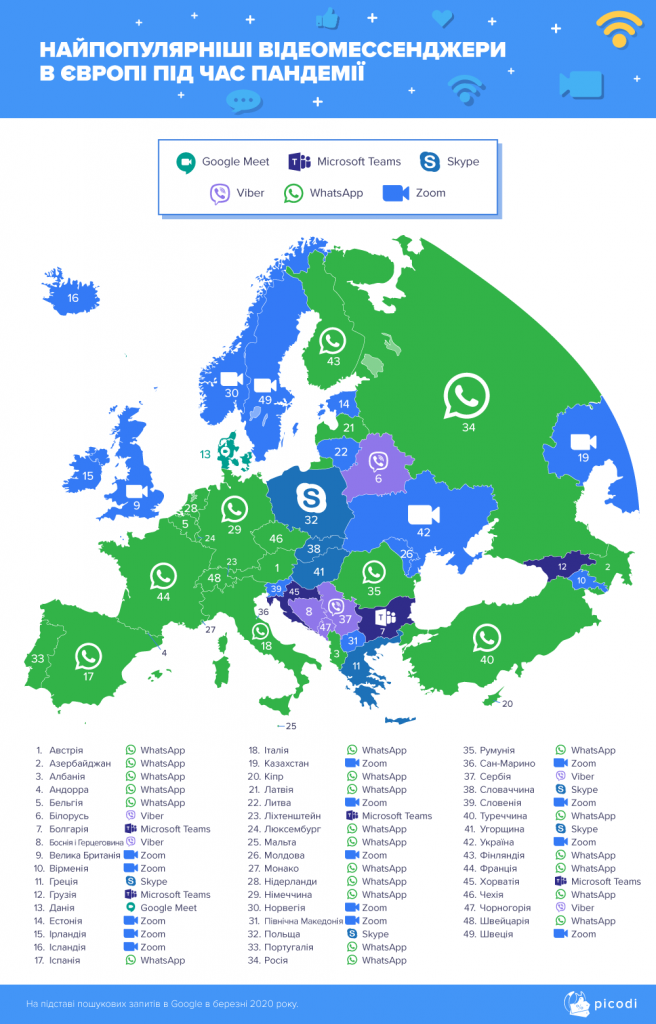
97.9% of Ukraine’s population uses Viber. So that shows us who’s taking the crown. Apart from that, Viber is mainly popular in Europe, with Bulgaria, Greece, and Ukraine being the top Viber users. Russia has a 43% install rate, followed by the Phillippines at 30%.
(Similarweb, Statista)
The latest Viber statistics point to 1.169 billion Viber users worldwide. The most significant milestone happened in March 2018 when the number hit 1 billion active users. Ever since, the VoIP has been increasingly used by the experts in digital marketing for personalized and direct communication with their leads and clients.
(Statista)
Viber came hot on the heels of Facebook Messenger to become one of the largest messaging apps. The mobile messaging app was founded in 2010 in Tel Aviv, Israel.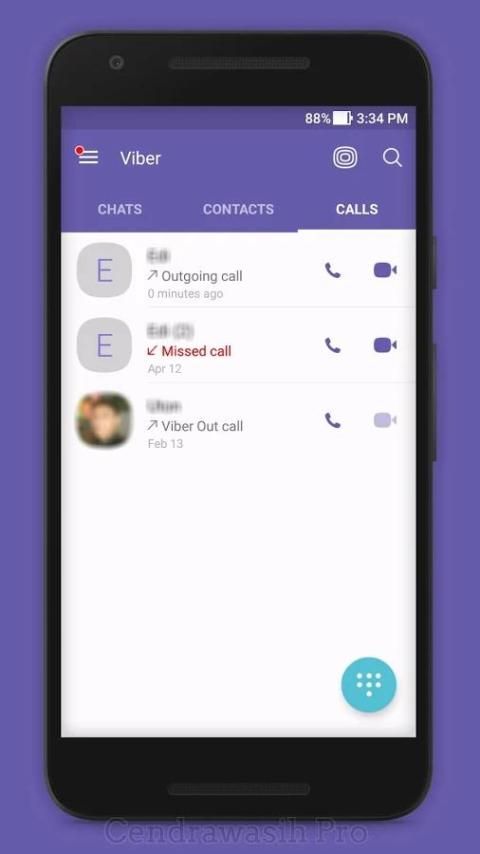 A year after its launch, Viber had 19 million unique users. Since then, its user base only continued to grow.
Social media statistics reveal that social media platforms have a strong foothold in Southeast Asia. Thus, it is no surprise that Viber would experience strong growth in the region. Aside from that, the social networking app is also popular in Eastern Europe and other parts of Asia. Take a look at the Viber statistics below and see how the platform has developed and become prominent.
The following Viber user statistics give an idea of the audience of the instant messaging and calling app. A few figures also touch on the activities or behaviors of its users when it comes to text messaging as well as photo and video sharing.
 169 billion unique user IDs. (Rakuten, 2020)
 (Fast Company)
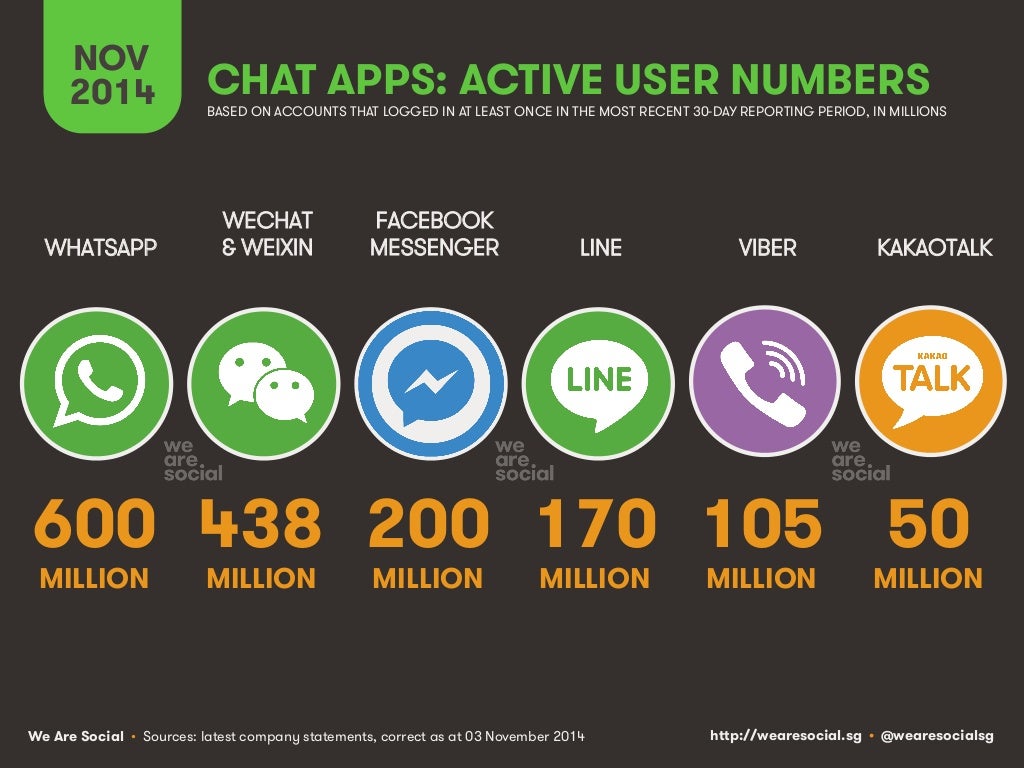 (99firms, 2021)
Viber usage statistics reveal that Viber is not without issues regarding its services. A case in point is a survey in which Russian users participated.
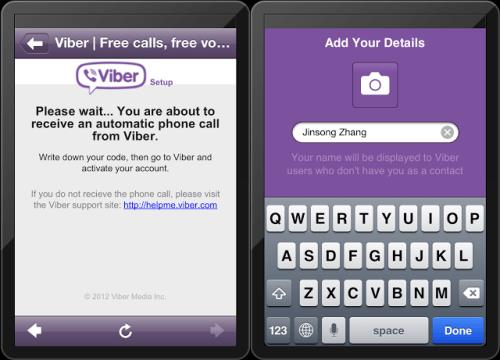 (99firms, 2021)
Source: 99Firms, 2021
Designed by
A Viber marketing success story involves the World Wildlife Fund. The organization uses Viber to reach out to its supporters and to find new donors. In a movement to double the number of tigers in the wild, the group launched a multi-part campaign. Their efforts resulted in 21.5 million interactions with the WWF chatbot.
 170 million. (Tech in Asia)
Battle of Chatrooms: Viber vs Others
Viber: 1 billion members
Viber
1 billion members
Battle of Chatrooms: Viber vs Others
Telegram: 1 million members
Telegram
1 million members
Battle of Chatrooms: Viber vs Others
WeChat: 500 members
500 members
Battle of Chatrooms: Viber vs Others
WhatsApp: 256 members
256 members
Battle of Chatrooms: Viber vs Others
Facebook: 150 members
150 members
Source: NewsBytes
Designed by
 (Bizadmark, 2020)
Japanese ecommerce giant Rakuten acquired Viber in 2014. The deal had a price tag of $900 million. Moving forward, the company had encountered losses and also registered soaring profits.
 (Plugged, 2021)
The Viber statistics above are enough to inform anyone that Viber may not be as huge as Facebook Messenger, but it definitely has a wide and strong userbase. In particular, Rakuten’s social networking solution is immensely popular among smartphone users in Asia. That is why companies are increasing their social media marketing efforts on the platform.
Users like to use the chat and call app because it offers free messaging. Sure, there is a caveat attached to the “free”. Nevertheless, Viber’s audience enjoys using it for text messaging. Moreover, it allows users to make calls to other countries at a fraction of the usual cost. Indeed, many compare Viber services with Skype features. It is cheaper to make calls to landlines and mobile phones using Rakuten’s mobile messaging and calling service. Plus, users can send SMS messages directly to mobile phones.
Furthermore, the messaging app offers a one-week free trial of its calling service. Those who are not sure whether to subscribe to Viber can take advantage of this and call contacts on mobile or landline in 60 countries. The mobile communication solution Viber also supports video calls, which are crucial during the pandemic when movement is still highly restricted.
It has growing communities as well. The World Health Organization has been using the feature to disseminate information and to battle disinformation regarding COVID-19. Countries, various organizations, and local government units as well are utilizing the platform to keep their constituents informed. Perhaps, this is one of the factors that drives Viber’s growth.
References:
 (2020, December 4). How to use Rakuten Viber for marketing (6 best strategies). Bizadmark.
 Statista.
 (2021). WWF. Viber.
 TechCrunch.
B2B & SaaS market analyst and senior writer for FinancesOnline. He is most interested in project management solutions, believing all businesses are a work in progress. From pitch deck to exit strategy, he is no stranger to project business hiccups and essentials. He has been involved in a few internet startups including a digital route planner for a triple A affiliate. His advice to vendors and users alike? "Think of benefits, not features."
In the meantime, we have collected the top ten most popular instant messengers in the world so that you know who is in the top now and, perhaps, try a new communication program for yourself.
Compilation information is from Statista.com and figures are current as of October 2020. The exception is Telegram, the number of users of which became known on January 12, 2021.
The most popular instant messenger in the world is WhatsApp. The number of its monthly users is greater than the population of China, and until recently this figure has been growing. But the app has been accused of transferring user data to owners from Facebook, and although representatives of the messenger deny everything, millions of people are moving to Telegram and other competitors. So far, this is a drop in the ocean, but soon everything can change.
WhatsApp has become popular due to the flexibility of communication, the ability to create groups for business, blogs and media. In Asian countries, the messenger is used as a full-fledged social network and news source, and many people earn big money in it.
The second position belongs to Facebook Messenger. The app with 1.3 billion users was originally part of the social network Facebook, but in 2011 became a separate service with advanced features.
Some people find Messenger too complex and unwieldy, and that's partly true. And yet, this does not prevent people around the world from conducting their business through Facebook Messenger, communicating with relatives and friends, advertising products, making thematic mailings and various useful chat bots for fun or making money.
Closes the top three WeChat. This messenger is almost unfamiliar to users from the European part of Russia, but has long become the main application for China and other Asian countries. Through WeChat, you can not only communicate and exchange messages, videos and stickers. This is a complete - and official - payment system for utilities, ordering a taxi, food, goods and services.
Over the past year, WeChat has grown slightly and these figures amounted to almost 40 million users of growth. For other messengers below, these are huge numbers, but against the backdrop of 1.2 billion, the next 40 million people are a drop in the ocean. It is possible to predict the growth of WeChat, because there is still a lot of unreached audience in Asia. But there is another popular application there, which we will talk about below.
Another popular messenger in China has long been QQ. The application is also available in 80 other countries around the world, where it is also popular, but China remains the main market for QQ. In addition to messaging, the messenger has online games, personal blogs, account and avatar decorations, online shopping and quick payments
Over the past year, QQ has lost users - in 2019, the monthly audience was 731 million users, in 2020 it fell to 648 million. For such a size, this is a serious drawdown, and for comparison, imagine that the entire population refused to use this messenger Turkey or Germany.
2020 was the time for Telegram to take off. Back in April, the creator of the service, Pavel Durov, reported 400 million users, and a couple of days ago this figure exceeded 500 million. At the same time, 25 million people from Asia, Europe and Latin America came to the messenger in three days. All of them, according to Durov, came for privacy and security. Among these 25 million people, which is equal to the population of the DPRK or Madagascar, there were two presidents: the head of Turkey, Recep Tayyip Erdogan, and the President of Brazil, Jair Bolsonaro, registered on Telegram.
Telegram is considered one of the most secure instant messengers in the world. Roskomnadzor tried to block it for a long time, and then gave up and now uses it together with officials. Until recently, there were no video calls in Telega, but in the context of a pandemic, they quickly appeared. In addition to a variety of communication, the messenger is famous for its channels and thematic groups, and thanks to data security, many independent and banned media use it as the main platform for broadcasting.
Snapchat is also showing good growth. In 2019, the messenger had 398 million users, and in 2020 the figure increased to 433 million. Snapchat has a large audio store in the United States (80 million users), but in other regions, including the CIS countries, this application is quite popular - mainly in youth under 19 years of age.
Snapchat features short videos and modern multimedia messages with photos and captions. There is also a classic correspondence, but most people love Snapchat precisely for video content and an abundance of image editing tools.
Discord is not just a messenger, but a complete platform for gamers. During the pandemic, not only players began to use the service, but the main audience is still fond of video games. In Discord, you can chat, communicate by voice in special groups, create thematic channels and separate servers. Groups of many gaming guilds, media and other communities are open here, including Kanobu, Reddit, Twitch and others.
Over the past year, Discord's audience has grown, and seriously, at least for its size. In 2019250 million monthly users used the app, at the end of 2020 the audience reached 300 million
Viber is another not just messenger. It is a tool for business promotion and advertising. Through the application, you can not only exchange messages, but also make audio and video calls, send videos and funny pictures with stickers. Viber is popular for its thematic channels, groups for online purchases, utility bills and other payments.
At the end of 2020, Viber had 260 million monthly users. Most of them are from Europe. The messenger is very popular in Russia, Belarus, Ukraine and other post-Soviet countries.
In Line, not only exchange messages, but sit in group chats, send funny stickers and funny videos to each other, exchange voice messages, multimedia and more.
The Line app is mostly popular in Asia; the key audience is youth. Among other regions, Line is enjoyed in the US and UK. Line has only 250M monthly active users so far; compared to other Asian messengers, this is almost nothing. But if you take it around the world and compare it with other popular services, then the figure no longer seems insignificant.
The once mega-popular Skype is now hardly in the top ten most-most in the world. By the number of users who left the application, this is the “leader” in our top. In 2017, 300 million people used the messenger every month. By 2020, the audience has decreased by six times and amounted to 50 million users. The outflow of the Skype audience turned out to be as if the population of Brazil and Ukraine together had refused to use this application at once.
There are several reasons for such an early drop: mediocre video quality, a cumbersome application and the emergence of more serious competitors. Over time, of course, Skype improved communication, patched up the client and even updated the interface, but it was too late. And other instant messengers now offer brighter and more diverse features.
Internet Web Services
|
Share
Mobile operator Yota traced how the Internet traffic of customers spent on instant messengers changed from January 10 to March 13, 2022. On March 11, 2022, the volume of traffic to the Russian TenChat application increased by 586 times compared to January 11, 2022. Yota representatives told CNews.
The data for analytics includes five foreign and five Russian instant messengers. Among the foreign ones were WhatsApp, Viber, Signal, WeChat and Facebook Messenger. In the list of Russian ones: Telegram, Tam Tam, TenChat, Yandex.Messenger and Agent.Mail.ru.
The total Internet traffic for all ten messengers showed a sharp jump in growth in February: on February 24, 2022, the volume of traffic was 1.9 times higher than the day before. Then the traffic slightly decreased by March 8, 2022, but returned to the previous values by the end of the period under review.
Internet traffic to messengers from January 10 to March 13, 2022
The leader among instant messengers was and remains Telegram. In second place is Viber, then WhatsApp. During the period under review, Telegram increased its share in total traffic to messengers from 95.37% in January 2022 to 97.02% in March 2022. The Russian Tam Tam application also increased its share in traffic from 0.16% in January 2022 to 0.23% in March 2022. Other messengers lost in the share of total traffic compared to January 2022.
How did the shares of Internet traffic to messengers change from January to March 2022
Applications showed the largest increase in traffic and users in March compared to January:
1. TenChat: traffic growth by 586 times, users - by 243 times.
2. Agent.Mail.ru: traffic growth by 6.5 times, users - twice.
How to get ₽30 million to bring an artificial intelligence solution to new markets
IT industry support
3. Tam Tam: quadrupled traffic, users 1.5 times.
4. Telegram: traffic growth twice, users - 1.5 times.
WhatsApp, Viber, Signal and Yandex.Messenger had even slight growth in traffic and users. The graphs of the same applications have a pattern and look like waves - every weekend the activity decreases, recovering on weekdays. The WeChat app remains at its year-to-date averages.
The only messenger that lost ground both in traffic and in the number of users is Facebook Messenger.