By
Josh Ocampo
Comments (1)We may earn a commission from links on this page.
Photo: Shutterstock
Lifehacker's Complete Guide to Data Privacy) : titleLifehacker's Complete Guide to Data PrivacyWe'll walk you through everything you should do to live the most secure, private life in the digital era.
In an interview last week regarding privacy concerns, Instagram’s CEO, Adam Mosseri, wants you to know: Your privacy isn’t at stake (for now). “We don’t look at your messages, we don’t listen in on your microphone, doing so would be super problematic for a lot of different reasons,” he told CBS’ Gayle King. “But I recognize you’re not gonna really believe me.”
But when you have a public account on Instagram, you’re vulnerable to a lot more than just targeted ads. The app reveals when you’re online, what you’re “liking,” and if your phone contacts are linked, virtually anyone can find you. In October, The Atlantic addressed the rampant problem of harassment on the app, as enabled by Instagram’s easy set-up of anonymous accounts, like on Twitter.
“But while Twitter now allows users to protect themselves—by muting replies from people who don’t follow you, whom you don’t follow, who aren’t verified, who haven’t confirmed an email address, and more—Instagram has implemented only some of these controls,” writes Taylor Lorenz. “For instance, on Instagram, you can hide comments from people you don’t follow or who don’t follow you—but you can’t hide them from people who have a default avatar or haven’t confirmed their email address, two hallmarks of burner accounts.”
You can’t become completely invisible on Instagram; at the very least, your username will visible to anyone who searches for it on the platform. Still, if you want to maintain a little extra privacy on the app, it’s important to disconnect your phone number and even sign up using a different email than your personal one to avoid unwanted contact.
First things first: In order to hide your Instagram from public view, you should make your account private; to do this from a smartphone, tap on the menu on the top right of your profile. (It looks like three horizontal lines.) From here, go to “Settings” > “Privacy” > “Account Privacy,” and toggle on the private feature.
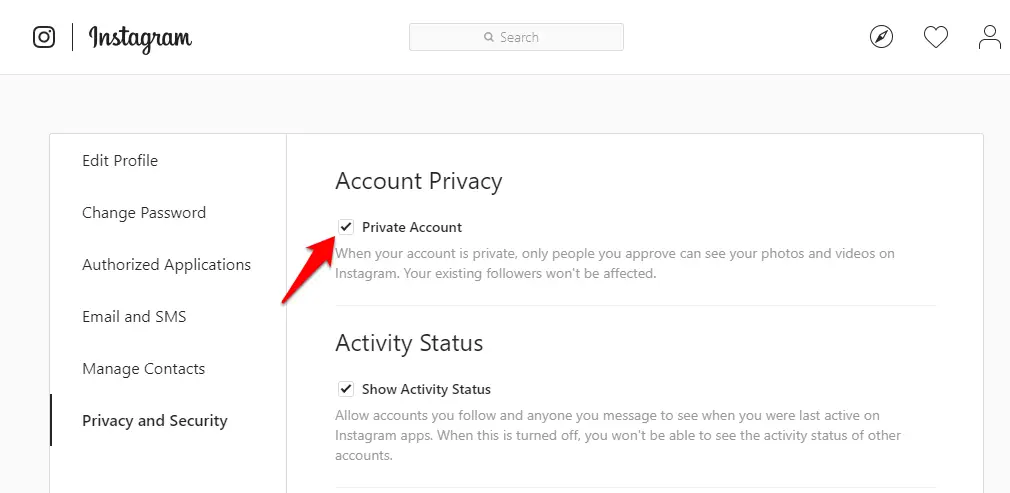
On a computer, just go to your profile > “Edit Profile” and you’ll see the option to make your account private.
If you use a hashtag in any post, don’t worry: Both your profile and the photo will remain private. If you like a public post, however, your username will be visible and remain clickable, though only approved followers can see your actual posts.
Screenshot: Josh Ocampo
Next, you’ll probably want to disconnect your contacts; if your number is attached to your Instagram account, anyone can find your account. To disconnect on a mobile device, go to the menu, “Settings” > “Contacts Syncing” and toggle off “Connect Contacts. ” On a computer go to your profile > “Edit Profile” > “Manage Contacts” and delete any synced contacts. (You’ll still have to toggle off the feature on a smartphone, however.)
If your Instagram is linked to any other social networks, like Twitter or Facebook, users can also find you using these accounts. (Also, any of these third-party apps can use your information at their disposal—according to Instagram’s privacy page, if you grant access to certain third-party apps, some of your private posts can become searchable via Google or any other search engine.)
On a smartphone, go to the menu, then “Settings” > “Account” > “Linked Accounts.” From here, you’ll find a list of social media platforms; if you click on one, it should take you to the appropriate website with the option to disconnect. If it asks you to authorize Instagram to your account, you may already be disconnected. On a computer, go to your profile > “Edit Profile” > “Authorized Applications” > and revoke access to any apps that are currently connected to your account.
Another way to accomplish this is to visit the platform directly. Here’s how to do it across a few platforms:
Your activity status on Instagram allows any account you follow or message to see when you were last on the app.
Screenshot: Josh Ocampo
To turn this feature off on a smartphone, go to the menu, “Settings” > “Privacy” > “Activity Status” and toggle this option off. On a computer, go to your profile > “Edit Profile” > “Privacy and Security” and disable the visibility of your activity status.
Know that you also won’t be able to see the activity status of other users while this remains off; if you really want, however, you can toggle the option on and off for a brief moment to view someone else’s activity status.
Anytime you decide to share an Instagram story on a public account, any of your followers can share that story in a direct message to any other user. If you want to disable this feature on your smartphone, go to the menu > “Settings” > “Privacy” > “Story.” Here you can disable “Allow Sharing as Message.” (Any user could still screenshot your story; that said, it’ll still curb their efforts to try and share it.) On a computer go to your profile > “Edit Profile”> “Privacy and Security” and toggle off “Allow Sharing.”
Screenshot: Josh Ocampo
There are useful features under the story privacy settings, too. You can hide any future Instagram story from certain people at your discretion (sorry, Mom) or create a “Close Friends” list; you share future stories with only a few select people using this list.
Let’s say you have one particularly enthusiastic follower leaving comments on your every post. Luckily, you can preemptively block comments from certain users without them knowing.
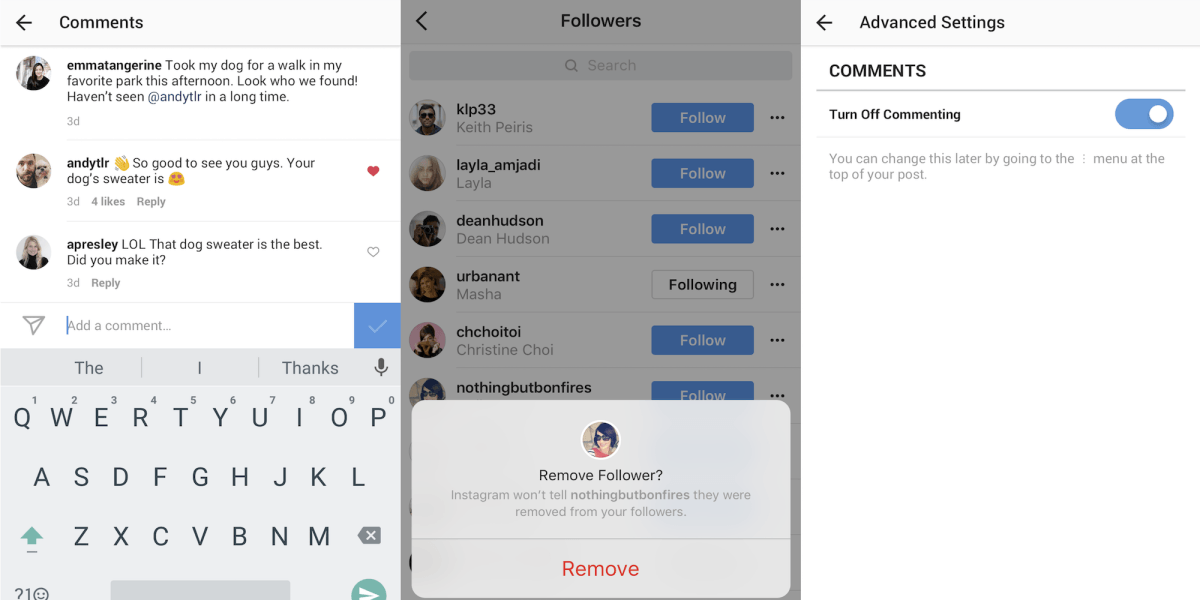
On a smartphone, go to the menu > “Settings” > “Privacy” > “Comments” > “Block Comments From” and add any users you want. Here you’ll also find the option to hide offensive comments as well as create a manual filter that blocks certain words or phrases from showing up in your comments section.
Screenshot: Josh Ocampo
On a computer, go to your profile > “Edit Profile” > “Privacy and Security” > and “Edit Comment Settings” under “Comments.” Here you can block certain words or phrases from appearing in your comments, but you’ll have to use a smartphone to block specific people from commenting.
And if you’re still worried about your profile’s privacy, here are few other necessary tips from Reddit. For one, you might want to create an account using a new or different email address than your personal one; while you can hide your email from your profile and make your account private, there’s still a chance a user can find your Instagram profile using that email. You might also want to use a profile photo that isn’t easily reverse image-searched and traced back to a Facebook profile, for example. Your profile photo is public to anyone, meaning you can still be found despite all your efforts to remain private.
For more from Lifehacker, be sure to follow us (using your private account, of course) on Instagram @lifehackerdotcom.
Can you believe it’s only been eight years since Instagram introduced us to its unique filters and recognizably-square shaped photos?
That’s right!
Since its launch in 2010, social media users all over the world have continued to flock to the photo-sharing app. Personally, I’ve had my account since 2011. Over the past seven years, I’ve posted hundreds of life updates in the form of pictures and videos.
In high school and the early college days, I left my profile on public. That means that anybody using the Instagram app could come to my profile, see my posts, and follow me without needing my permission.
However, as I began my job search, I realized that maybe my potential employers didn’t need to see my post-wisdom teeth removal picture (can you say chipmunk cheeks?) or the half-dozen pictures from my various sorority formals.
It was definitely time to make my account private.
Are you in the same boat?
Maybe you’re starting your job hunt and want to hide some of the more questionable college days from potential employers.
Maybe you’re trying to hide your posts from that aunt in Georgia who you just know has been creeping on your Instagram account since you abandoned Facebook.
Whatever your reasoning may be, you’re ready to take your Instagram account private.
Luckily, it’s a super simple task!
In this quick guide, I’ll give step-by-step instructions (plus corresponding images) to show you how to switch your Instagram account to private. But first, let’s discuss what going private really means.
Read this before you make your Instagram account private! Depending on your objectives, you may realize that a public account may be the better option.
Private Instagram accountWith a private Instagram account, users that land on your page will be able to see your profile picture, username, and bio. They can also see how many followers you have, how many people you follow, and how many posts you have. They won’t be able to see any of the actual posts.
If they want to follow you, they have to send you a request. However, your profile will look the same to them until you accept their follow request. Once you do, they’ll be able to see your Instagram posts. With a private account, your Instagram posts will not appear in other users’ Discover tab.
A private Instagram account can be an excellent option for people who are just using Instagram in their personal lives. If your goal is to share life updates with only the people who know you, then a private Instagram account is for you. The image below is an example of a what a private Instagram account looks like to a non-follower.
If you’re using Instagram as a platform for your personal brand or business, then you’ll probably want to opt for a public Instagram account. (And, if you haven’t already, be sure to check out our ultimate guide on Instagram marketing.)
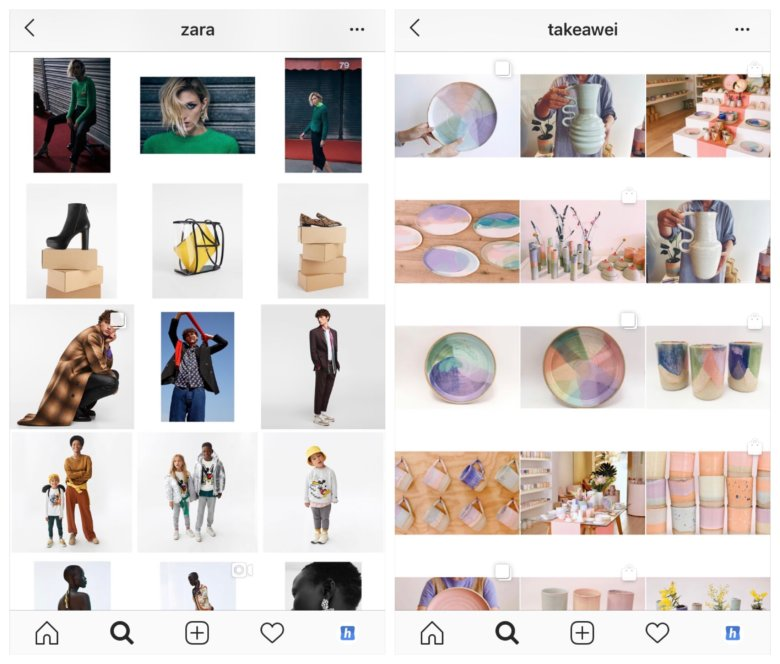
Not only will a public account make it easier for people to follow you (you won’t have to approve every request that comes through), your posts can also appear on Instagram users’ Discover tabs! That means there is a good chance users will stumble upon your account and discover your content organically.
If your goal is followers and engagement on your profile, or to ultimately run an Instagram business account, then a public account is more likely to help you reach those goals.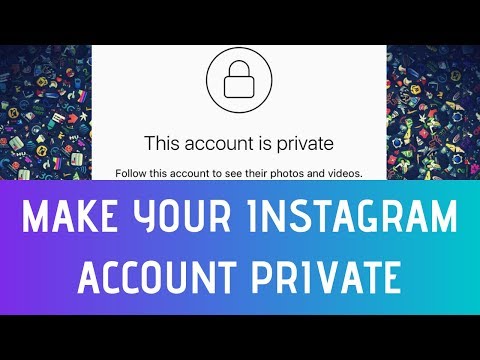 The image below is what a public Instagram account looks like to a non-follower.
Still convinced you want to have a private Instagram account? No problem! Grab your smartphone, open the Instagram app, and let’s get started!
1. Open Instagram and log in to your accountThe first step is easy! Grab your phone, open up Instagram, and log in to your account. (Disclaimer: Our instructions and screenshots will show you how to switch your account to private from an iPhone. However, this is also possible from an Android or your desktop! These instructions should still help you get there.)
2. Navigate to your Instagram profileFrom the Instagram home page, navigate to your profile. There is a button in the bottom right corner that’s the same as your Instagram profile picture. Click that to be taken to your account.
3. Open up your settingsFrom your Instagram profile, open up your settings.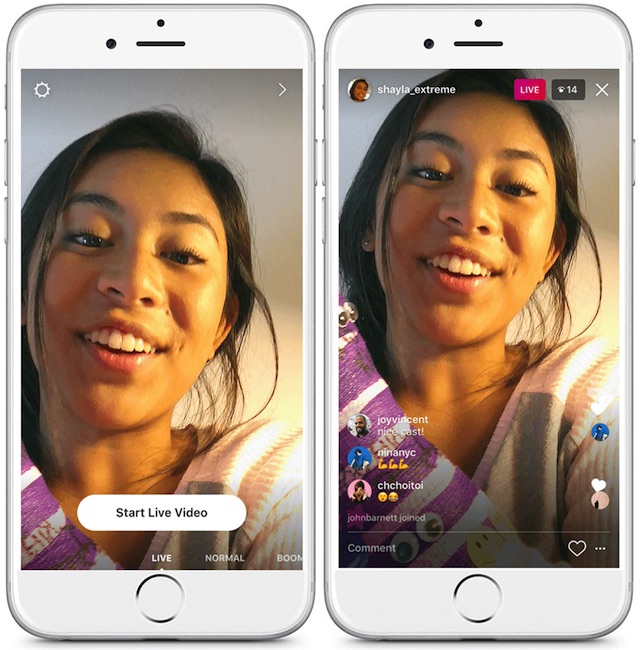 This button is in the top right corner next to the “Edit Profile” bar. On iPhones, the settings button is a cog. On an Android, this button is an ellipsis.
When you open up your settings, you’ll find a long list of options regarding all of the ins and outs of your Instagram account. Resist the urge to go look at every post you’ve ever liked (it’s tempting, but you’ll be sucked in for hours) and continue down to the Privacy and Security tab.
5. Click on Account Privacy and make the switch!When you find the Privacy and Security tab, click the first button on the list says “Account Privacy.” From there, flip the switch on Private Account, and you’re done. Your Instagram account is officially private and only people you approve will be able to see your photos and videos.
Keep in mind that making this switch won’t affect your existing followers. Anybody who followed you before you went private will still be able to see your Instagram posts.
It’s really that easy. Now that your profile is private, don’t forget you’ll have to approve any new follower requests. I hope this guide was easy to follow and left you feeling well-informed. See you next time!
Claire Brenner
Claire is a former growth marketing team manager at G2. Born and raised in the Chicago area, her brief stint in Ohio (University of Dayton) gave her a new appreciation for deep-dish pizza, but left her well-versed in Cincinnati-style chili and "cities" with a population fewer than 400,000. While not writing, Claire can be found practicing calligraphy, seeking out the best dive bars in Chicago, and planning her next trip. (she/her/hers)
.
Someone actively promotes their profile, and someone wants to close their Instagram account from prying eyes. You can do this in a couple of clicks, you just need to find the desired item in the settings.
Now Instagram has updated the “Settings” section. We are posting screenshots of how to close your Instagram account after the 2022 update.
update Below you will find instructions on how to close your Instagram profile so that posts and stories are only visible to followers. Even on anonymous browsing sites, your Stories will not be viewable.
If you want to temporarily hide your account from everyone, you can block it. And if only from a specific person, then block his profile.
When someone wants to follow you, you will need to go to notifications and confirm or decline the subscription.
In order for one of the already approved subscribers to no longer see your posts, he must be removed from the subscribers. Open the list of your subscribers, find the right one. Click the three dots on the right, select "Delete". Your subscriber will not know about this until he goes to your profile (he will no longer be able to see the posts and will understand that he was removed from the subscribers).
To make the account open again, repeat all the same steps (screenshots above). Open the settings, find "Privacy and security", after - "Account privacy". "Closed Account" Drag the slider to the left. "Make the account public?" Click OK.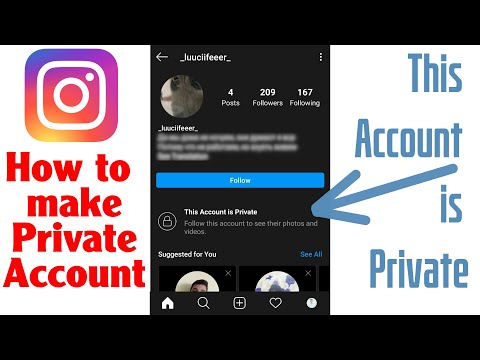
.
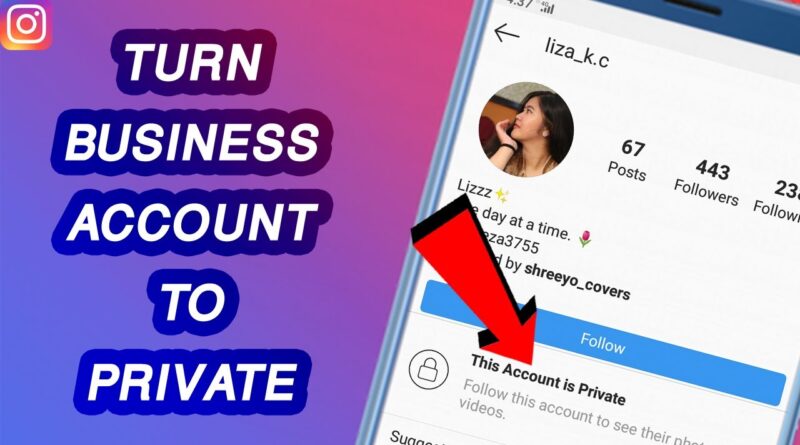
None. If you have an account with connected statistics (business account), then you can make it closed only by transferring it back to your personal account. Business accounts were invented to make promotion on Instagram more efficient. Accordingly, such an account should be open in order to attract a maximum of subscribers. Still want to close your profile? Switch to a personal account without statistics and then close it according to the instructions above.
How to switch back to a personal account is in the article: How to make a business account on Instagram.
In 2020, after the update, only the interface has changed, while all the advantages and disadvantages of a closed account have remained the same.

Sometimes bloggers close their Instagram account on purpose. Reasons:
 Interested in advertising, and to see the account - subscribe.
 If you are just starting to maintain an account, it is better not to close it.
By default, each registered account on the Instagram social network is open to all users. Any owner of an Instagram page can view posts and Stories, send private messages and leave comments. For those who do not like publicity, it is possible to hide their publications from outsiders.
In some cases, it becomes necessary to block annoying visitors so that they cannot interact with the owner of the Instagram account. Privacy settings allow you to restrict access to the profile to unwanted interlocutors, spammers and scammers. Also, such a decision may be due to the desire to hide their activity from a certain circle of people.
After activating a private Instagram profile, new followers will be required to request permission to follow and view posts. Approve the application from each specific follower or reject, the creator of the account will decide. If a particular subscriber is undesirable, it can be removed using the option of the same name.
If you use Instagram through the official mobile application, the procedure is as follows:
After enabling this option, only existing followers, as well as those who have received appropriate approval from the account owner, will have access to visiting the page on Instagram. If a particular subscriber annoys with insults or unwanted communication, it is enough to add him to the so-called "black list".
To do this, you need to visit the profile of the ill-wisher and click on the ellipsis symbol at the top of the screen. After that, a list of functions will be displayed in which you will need to select the “Block” item. As a result, a window will appear with a warning that this user will no longer be able to write to you in Instagram Direct, view posts and Stories. This window will ask you to confirm the blocking of the user.
The procedure for activating a closed account on the desktop version of Instagram consists of the following steps:
If you make your Instagram profile private, then new followers will have to send a subscription request to the account owner. The corresponding requests will appear in the "Actions" tab located on the bottom panel.
Applications can be approved or ignored at your discretion. In order to allow access to publications for a specific subscriber, you will need to click on the "Confirm" button located opposite the profile picture.
To return your Instagram posts to other people, you need to follow the reverse procedure. To do this, in the Instagram profile settings, you need to go to the "Privacy" section. Then uncheck the box next to the "Closed account" line, turning your account into a public one.
A warning will appear on the screen stating that the privacy settings have changed, and now all users will be able to visit the page without the approval of the creator. Here you will need to confirm your action by clicking on the "OK" button.
For a business account on Instagram, switching to a private profile type is inappropriate, since such an action is guaranteed to lead to the loss of some of the existing followers. In addition, this feature is only available for personal accounts. It is important to understand that Instagram is characterized by an engaged audience that actively engages with business account holders.
Potential customers will want to familiarize themselves with the assortment of the promoted brand. This will not be possible if the creator restricts entry to interested users.
This feature will be useful in cases where you want to protect your page from uninvited guests and unfriendly commentators, and make your stay on the Instagram social network more comfortable.