Facetime, Facebook, Whatsapp, and Skype have all revolutionised the way we communicate, whether that is with family and friends or business video conference across the world. We have moved away from costly international telephone calls but are we appreciating the true cost of higher data usage bills instead?
Many people are surprised to discover that the amount of data used on video calling varies depending on which apps are used. Apple’s Facetime is typically found to use the least data but may not always be a viable option as you can only call fellow Apple users.
Video calling on Facetime using your mobile data plan will use approximately 130mb to 180mb per hour, depending on your version of iOS. If you keep your iOS updated your data usage will be towards the lower figure, however you should always keep up to date with the latest iOS news as this may change in the future.
It is possible to restrict your ability to make and receive Facetime calls when there is no Wi-Fi connection in order to avoid excess data usage. Go to Settings, then Mobile Data, scroll to Facetime and use the slider to turn mobile data off.
Whatsapp video calls have been found to use the most data in independent tests, approximately 25mb for a 5 minute video call can be expected. This adds up to 300mb after an hour of video calls – approximately double the amount used by Facetime.
To reduce Whatsapp call data usage go to Settings, Data and Storage Usage and under Call Settings select ‘Low Data Usage’. This may affect your video call quality.
A Facebook Messenger call can be one of the most convenient ways to reach your Facebook contacts. Data usage for an hour of calls is approximately 260mb. Again, it is important to take measures to reduce your data usage during Facebook Messenger calls by making sure that you are on a wifi connection where possible.
Skype app-to-app video calls use approximately 225mb for an hour of calls, slightly less than Facebook and Whatsapp calls.
If video quality isn’t important for your call you can reduce the amount of data used during video calls by reducing the video call quality in your Skype app settings.
Although data usage for video calls can be small for the short 5-10 minute calls here and there, this can quickly add up if the calls become longer and more regular. Look at the data usage for a video call against your overall data usage limit for the month to work out how many calls you can comfortably conduct over your mobile data, don’t forget to take into account your normal day-to-day data usage.
You can save your mobile data by having as many of your calls as possible via a Wi-Fi connection and ensuring that your apps are all optimised for data-saving.
If you are a frequent user of video calling apps you may benefit from the Apps2Data service. By monitoring data usage throughout the day you can pinpoint any particular calls which were heavy on data and be aware of this in future. With an overall picture of your, or your business data usage throughout the month, Apps2Data puts you back in control.
Whatsapp has now become one of the most popular messaging apps ever to exist. The app has just about every feature you’d expect from a modern-day messaging app, including internet-based voice and video calls.
However, we’re not always connected to Wi=Fi, and as we all know, video calls can be first-degree data hogs. If you’re out and about and low on mobile data, making a video call might make you a bit uncomfortable because it’s highly likely that you’ll run out of data.
Another case is when you’ve already run out of data, and now your internet speeds are slower than a sloth. In such cases, reducing the data usage that Whatsapp video calls put on your connection’s bandwidth can not only help you save data but also might help you have stable video calls when you’re already exhausted your daily data limit.
In this article, we’re going over a few simple steps using which you can drastically reduce just how much data your Whatsapp video calls use.
Also read: WhatsApp vs Signal vs Telegram: Which one is the most secure?
It’s tough to put an accurate number on how much data does a video call exactly use. However, on a 4G network, a Whatsapp video call uses somewhere between 800KB to 1MB of data per minute on average.
After turning the data saver on, you can expect this usage to drop down to around 400-700KB per minute
Also read: How to fix ‘Waiting for this message’ error on WhatsApp?
Note that these steps will also apply to Whatsapp voice calls, meaning you’ll be able to save data on those as well. Open the app on your device and follow the steps mentioned below to reduce data usage during Whatsapp video calls.

You can also consider turning off mobile data or downloading Whatsapp media only over WiFi to save more data.
Also read: How to use WhatsApp on Samsung Galaxy smartwatches?
Yadullah Abidi
Someone who writes/edits/shoots/hosts all things tech and when he’s not, streams himself racing virtual cars. You can reach out to Yadullah at [email protected], or follow him on Instagram or Twitter.
Editorial Team 9:30 pm IST | September 21, 2021
Editorial Team 4:55 pm IST | July 22, 2018
IANS 4:35 pm IST | December 11, 2018
Yadullah Abidi 11:00 pm IST | May 26, 2021
Yadullah Abidi 10:00 pm IST | November 30, 2018
Nischay Khanna 11:00 pm IST | July 30, 2021
Kumar Hemant 7:00 pm IST | August 11, 2019
Sania Usmani 7:00 pm IST | June 21, 2022
Yadullah Abidi 5:00 pm IST | December 22, 2021
More
 How much traffic "eats" What'sApp?
 Author fast12v0_wotsap Read 9 min Views 6.2k. Posted by
Contents
First, you must understand the basic principle of Whatsapp and how it consumes your internet traffic.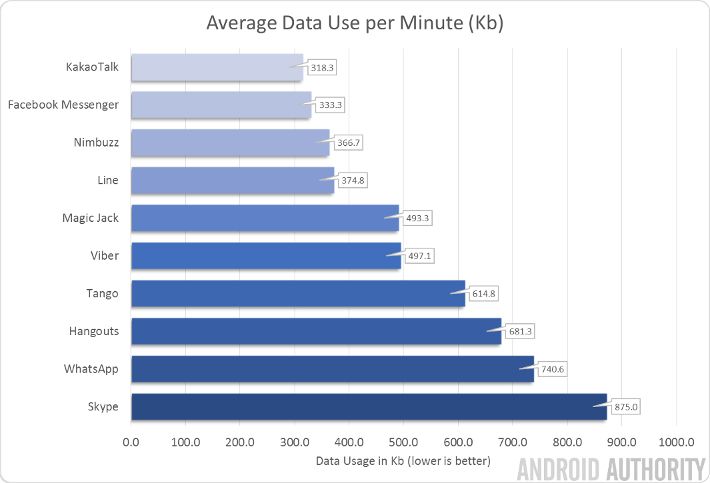 So, how is calling on WhatsApp different from regular calls on the mobile network? The fact is that WhatsApp connects to another subscriber via the Internet, and not through a regular mobile connection. Even if you use a 3G / 4G connection, you still communicate with your interlocutor via the Internet. All messages, photos, etc. are exchanged according to the same principle. This is how all instant messaging services and all applications connected to the Internet work.
Let's find out how much data is spent when the WhatsApp messenger is running in the background. The figure is small, only 1MB per day.
There are two more sources that consume the Internet. First of all, it is a backup. Using this feature, you can restore conversations and attachments if you need to reinstall the messenger. Using cloud storage wastes traffic, and the costs directly depend on the volume of files and messages.
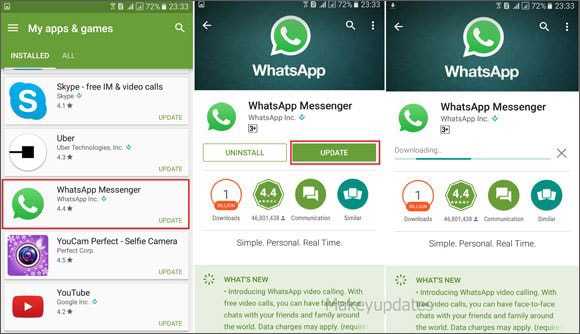
The second source is the automatic update of the messenger. The size of updates can be very small or up to several tens of megabytes.
We answer the question of whether traffic is wasted during a video call in WhatsApp - of course! This is a data transmission service over a cellular network: two subscribers communicate via a messenger and exchange information. You cannot make wireless or mobile calls and not use the specified MB.
It is important for some users to know how much data WhatsApp spends when making a video call. This applies to people using tariffs with a limited amount of traffic. If you have a monthly / daily limit, it's worth figuring out where the required megabytes and gigabytes go so as not to get into an awkward situation. You don't want to be without the Internet!
Unfortunately, there is no built-in function that allows you to view the numbers - how much is spent on video calls within the messenger. But we can use approximate data.
Data may vary: we give an average figure, based on which an approximate calculation can be made.
As you can see, the costs are small - you can talk for several tens of minutes and not be afraid that the connected Internet package will end. Our advice: It's better to chat via video when connected to Wi-Fi, so as not to consume mobile Internet. Here's how to block video calls.
Other numbers for comparison:
When sending photos and videos, you need to focus solely on the media size. And remember, WhatsApp compresses files to save data.
You don't need to think about what speed you need for a video call in WhatsApp - any modern tariff allows you to communicate via video without any problems. The average figure that is enough is 300 Kbps.
How much Internet traffic is spent on video calls in WhatsApp - received. If you have connected a limited tariff, be careful and do not forget to take into account the number of megabytes and gigabytes spent. As a rule, the standard package is enough for users for a long time, but it will not be superfluous to count!
The amount of megabytes consumed by whatsap depends on the duration. For one minute of conversation, WhatsApp spends about 1.3 MB of traffic. And it's just voice calls. Keep in mind that video calls cost a lot more.
If you have at least a few gigabytes of mobile traffic per month, these calls will be more than profitable for you. If less, consider using conventional mobile communications. Most WhatsApp users communicate only by correspondence, and text messages consume much less traffic than calls. So it won't have much impact on your mobile internet.
Now you know how much traffic WhatsApp uses in a conversation and how it works. It is impossible to say exactly which is more profitable between WhatsApp and mobile communications. Because everyone has different operators and tariff plans. For some this may be helpful, but for others it may not. But if you do not talk on the phone so often, calling via messenger will be much more convenient and profitable.
Text messages consume almost no data and with a few MB you can send thousands of messages without any problems. In tests done by ADSLZone, they calculated that it takes 0.732 KB to send a message of ten words, which is a fraction of a MB. To spend one MB of Internet, you need to send or receive more than 10,000 messages
When sending voice messages, the consumption increases, but only slightly. A 60-second voice message is about 138 KB, just over a tenth of a MB. If you are one of those who communicate via long voice messages, you will notice that consumption is growing, although not in a very noticeable way.
WhatsApp applies compression to all photos and videos sent through the app. This will save you a lot of MB in your plan. But you have to remember that if you want to send a photo and not lose the original quality, then it's better to send it the way we wrote in our previous articles (How to send a photo to WhatsApp without losing quality).
For example, a 1.8 MB image is compressed to 187 KB when sent to WhatsApp. The same thing happens with videos: when you send a 43.1 MB video, it is compressed to 4843 MB. Such compression helps us to save mobile Internet traffic, but degrades the quality of sent videos and photos.
The most used traffic on WhatsApp is audio and video calls. For example, a 60-second voice call is 344KB, which seems small, but if it lasts up to half an hour, it can exceed 10MB. For video calls, a 60-second call consumes 6.7 MB of internet traffic, while an hour-long video call uses approximately 400 MB of data. Therefore, it is recommended to connect to a Wi-Fi network during video calls to avoid losing mobile Internet traffic.
Approximate traffic consumption per minute of video communication is approximately 2.5 megabytes. This is the most resource-intensive kind of options available in the messenger. It takes a lot of data to process video and audio at the same time.
The developers do not provide the ability to transfer the application to the external memory of the device. But at the same time, there are several ways to clear your smartphone of unnecessary media files and other data.
Data transfer can be done in the smartphone settings:
Using third party software such as ES File Explorer, which can be downloaded and installed for free from the official app store. After downloading, you need to do the following:
Not everyone knows that WhatsApp automatically downloads photos, videos, audios that you view in dialog boxes to the phone's memory.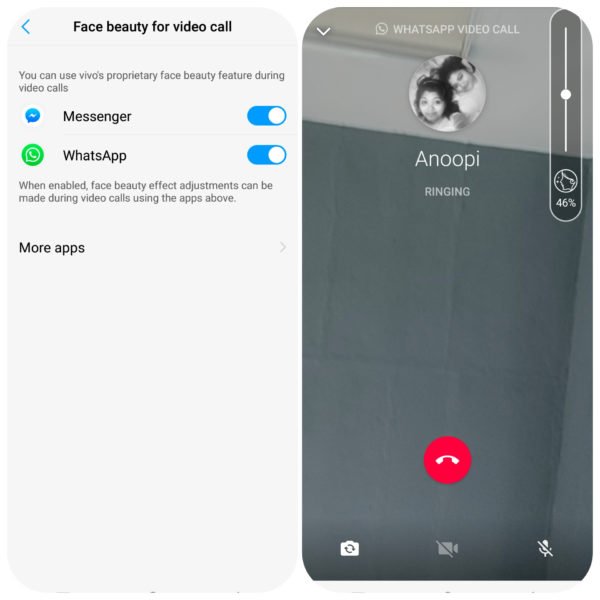 This not only clogs your smartphone's memory, but also greatly affects the traffic, especially if it is limited.
In a couple of clicks, you can disable downloading files. To do this, go to the menu Settings - Data and storage - Autoload media. The sections "Wi-Fi", "Roaming" and "Mobile Internet" will appear. In each of the paragraphs, you can cancel the download of both individual categories of files, and all completely.
People who use WhatsApp have appreciated the convenience of making calls in this program. Their main advantage is free. But you can also get money if you have limited internet traffic.
To reduce the consumption of mobile Internet, you need to go to Settings - Data and storage - Call settings. There will be an item "Save data". Check the box and WhatsApp is now more responsive to mobile internet consumption.
WhatsApp allows users to back up their chats and other media used in the application. While backup is important, users are advised to turn off automatic WhatsApp chat backup if possible.
To do this, go to WhatsApp Settings > Chat > Chat Backup > Select "Off" In the "Backup" section.
There is an option "Messengers +" on different tariffs, which provides free traffic for the following applications:
But there are a number of restrictions on use:
The results of the study showed that Telegram is the cheapest messenger. His appetites are 35-40% lower than WhatsApp. Pavel Durov's messenger, depending on the load, consumes from 0.42 to 3.75 MB of Internet traffic per 1 hour of use.
According to the set of parameters, we recognize Telegram as the best voice messenger. The application turned out to be the lightest among those presented, consumes an average amount of traffic, offers excellent connection quality and a desktop client for all platforms. The only drawback is the lack of group calls.
Content
 1 Calches costs
 Internet usage while the application is running is distributed as follows:

Communication with a picture requires more internet consumption. A minute of conversation without including an image uses 350 kilobytes, a similar conversation time with a picture is about 6.6 megabytes. One hour of video conversation corresponds to 400 MB transfer.
Mobile devices contain built-in utilities for calculating network connection costs. Access to the option depends on the platform on which the smartphone is running.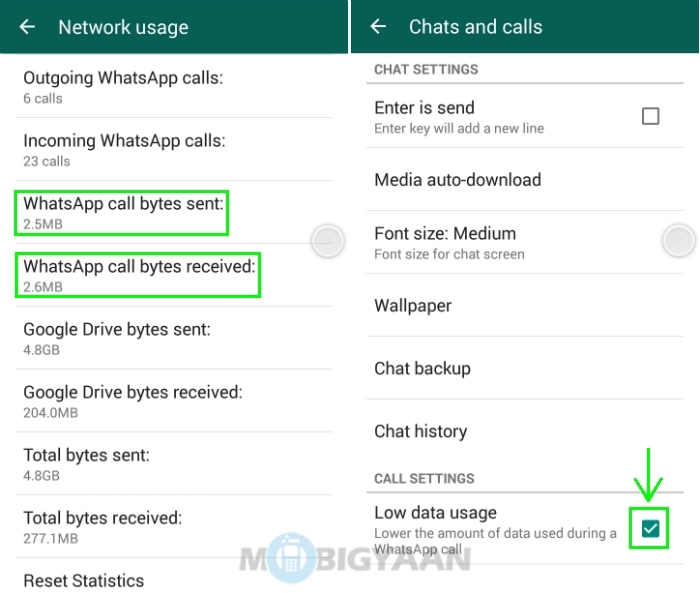 Most often, the information is located inside the options menu, in the "Connections" section. The name of the option varies: "Data usage", "Traffic monitoring", "Internet consumption".
Using this option, you can see the consumption of mobile data for a specific application for a selected period, as well as set a limit on data transfer through a specific service. When the limit is exhausted, all types of communication through the messenger will be blocked.
To clarify information about Internet consumption, you can use special utilities. There are programs that allow you to set up notifications about approaching the set limit, as well as regulate data transfer depending on roaming, connection method and other conditions.
Within the WhatsApp application, you can check the statistics related to the traffic used, including highlighting information on specific interlocutors.
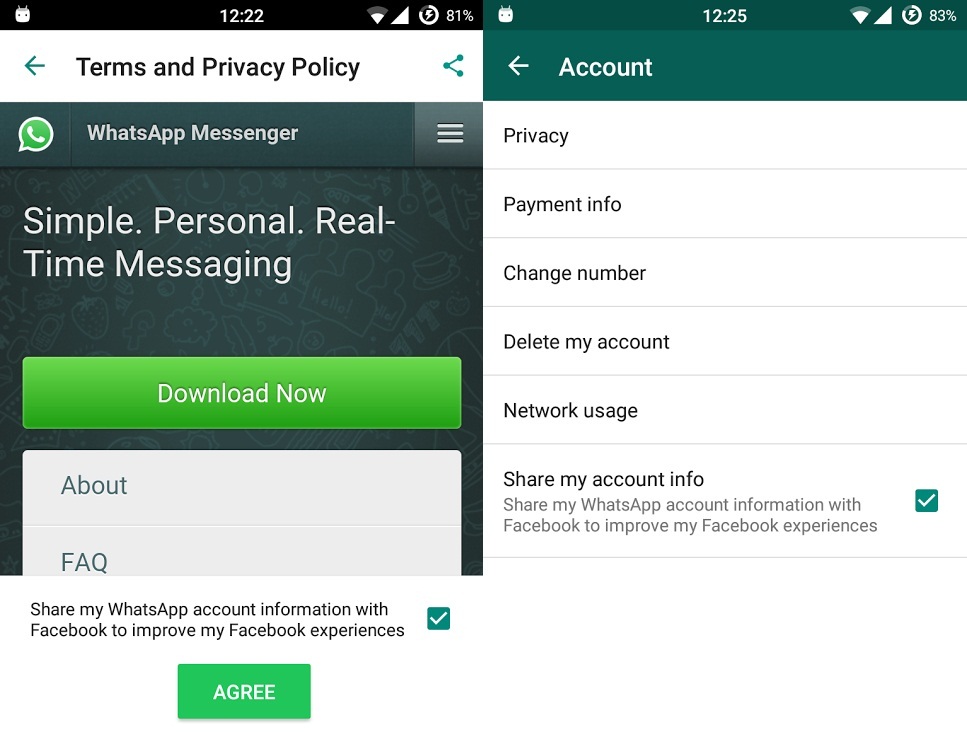
The "Network usage" option is located in the "Settings" menu section, inside the "Data storage" block.
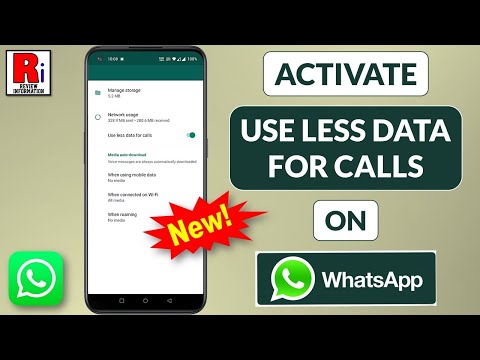
There are several methods to help you minimize your internet usage when communicating.
Voice messages are not multimedia files. You cannot disable automatic download for this type of messages.