Voice-notes are undoubtedly an effective middle-ground between actual calling and texting. Most Gen-Zers can appreciate the convenience of calling without having to be present on the call. Of course, many of these WhatsApp Voice notes contain a lot of important instructions, information and sometimes, even evidence that might make or break a case. Whatever the reason may be, it’s imperative that you know how to save a WhatsApp Voice note. So here’s everything you need to know about it.
There is no direct method that is available to download WhatsApp Voice notes on Smartphones. However, there are certain tricks that you can employ to save your WhatsApp voice notes. Here’s how it works.
Related: 3 Ways To Mute Whatsapp Calls
It can become difficult to identify and save a specific WhatsApp voice note from the hoard of voice notes that you exchange with other contacts on the chat app. So it is best to send the voice notes to a WhatsApp group that only consists of yourself. This is the best and most effective way to save your WhatsApp voice notes. You can then send the voice notes to the medium of your choice which includes Gmail or another chat app. We have covered tutorials for those in the latter part of this article. Let’s first understand how to create your own WhatsApp group.
Launch the WhatsApp app on your Smartphone. Locate the three-dot menu on the top-right of the screen and tap it.
From the menu, select the New Group option.
Select one willing participant to include in the group. Keep in mind that this is only temporary, you will be able to remove them once the group is formed. Then tap the arrow button on the bottom right to go to the next step.
Now type the name of the WhatsApp group to identify it as your WhatsApp Voice notes group in the text box that has been provided for this purpose. After naming the group, tap the checkmark on the right side and your group will be ready.
Now go to the Settings of the group by tapping the area that contains the name of the group.
Scroll down to Participant’s list and remove the name of the additional participant besides yourself.
Once you are the only person present in the group, go to the chat where the WhatsApp voice note is present and locate the voice note that you want to save. Long-tap the voice note that you want to send to your private group.
Tap the Forward icon on the top right that appears when you long-press the voice note.
Tap the WhatsApp group that you just created to forward the voice note.
Tap the arrow icon that appears on the bottom.
The voice note will now be available in the group. You can star it or even reply to it and assign it a name.
Related: How to make WhatsApp calls on Mac or Windows PC app
Scan the QR code from the WhatsApp app on web.whatsapp.com from the browser of your choice.
Once your WhatsApp loads on your browser, locate the Voice Note that you want to download. Go to the Voice Note that you want to download, click the arrow that appears on the top-right section of the specific voice note, and then click the Download option from the menu that appears.
Your Voice Note will now be downloaded to your system.
After clicking the arrow that appears on the top-right of the voice note, click the Forward message option.
Now a checkbox will appear next to all the messages in that specific chat. Click the checkbox for the messages that you want to download.
Once all the messages have been selected, go to the download button on the bottom right of the screen.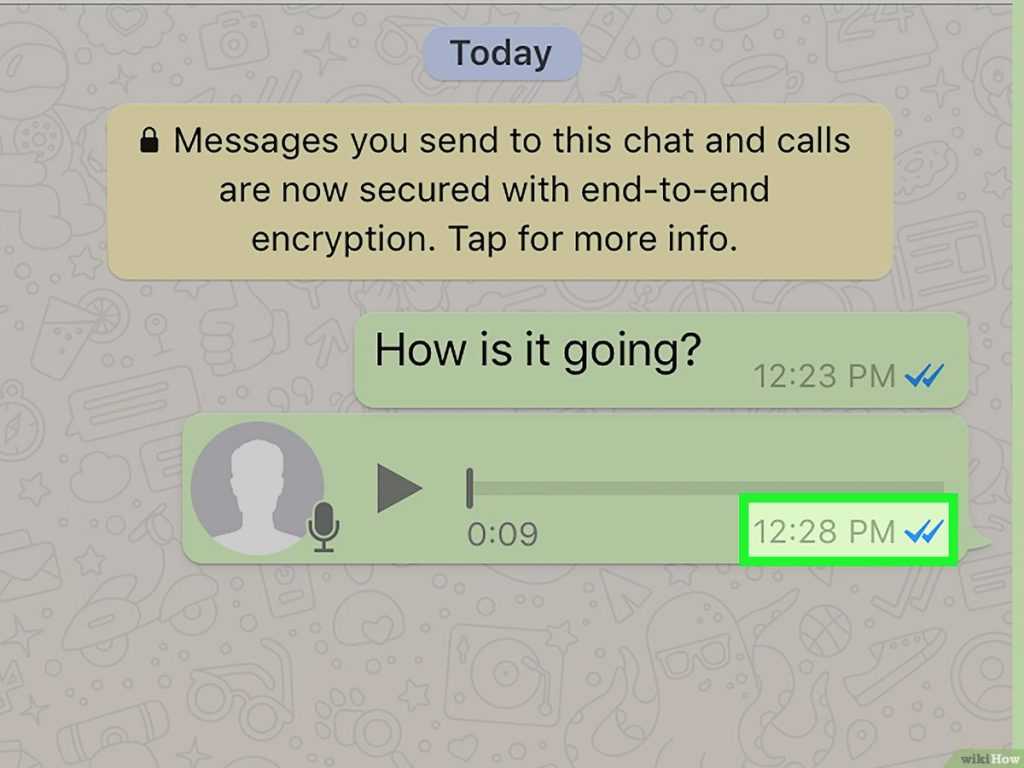 Click the download button and all the voice notes will be downloaded.
WhatsApp Voice notes are automatically saved in the WhatsApp folder which can be found in the internal memory of your phone. You can access it via iCloud or the File Manager app on your phone.
In the case of File Managers, the voice notes are already saved locally so you don’t have to perform any specific action to download the voice note.
Download a reliable File Manager from the Play Store for Android and the App Store for Apple Devices and open it. If you already have a file manager on your system then you don’t need to download another one, open the file manager that has already been installed on your phone. Now open the File Manager from the app drawer on your device. Depending on the File Manager that you’re using, all the app folders will either be visible on the homepage itself or you will need to go to the app folder from the homepage. You need to locate the app folder section of the File Manager and select it.
Once in the app folder, scroll down till you arrive at the WhatsApp folder. Select the WhatsApp Folder.
In WhatsApp Folder, go to the Media Folder.
From the Media Folder, you will be able to locate the WhatsApp Voice Notes.
In the WhatsApp folder, locate the WhatsApp Voice Notes folder and tap on it. All your WhatsApp Voice notes will be available in separate folders here. Go into the folder that contains your WhatsApp Voice notes. You can locate the voice note according to the time and date of the audio.
Once in the folder, select the audio that you want.
You can long-press the audio and share it with yourself via email or any other medium. Follow the tutorial we have shared below and it will apply just fine to this file as well.
Long press the voice note that you want to send.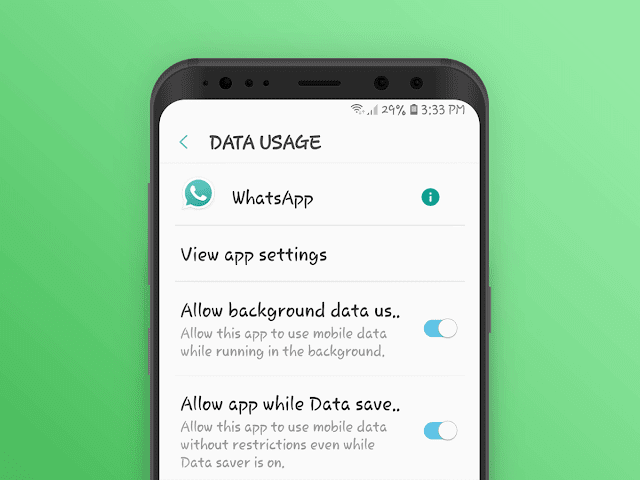 You can also select multiple voice notes at this point.
Once you do this, the Share option will appear on the tap along with a few other options. Tap the Share button.
Now scroll down from the list of options shown to the Gmail App. Select the app and then tap the app icon.
The app will open directly at the compose page of Gmail App. Type in the email address where you want to send the voice note. You can self email the voice note from here. Once the voice note mail appears in your Gmail Inbox, open the mail and download the voice note.
A cool benefit of the sharing feature is that you can send a WhatsApp voice note to the Signal App as well. Here’s how.
Long press the voice note till the Share option appears on the top of the screen. Again, keep in mind that you can select multiple voice notes to share. Then, tap the Share button.
From the list of apps that appear in the sharing option, tap the Signal App icon.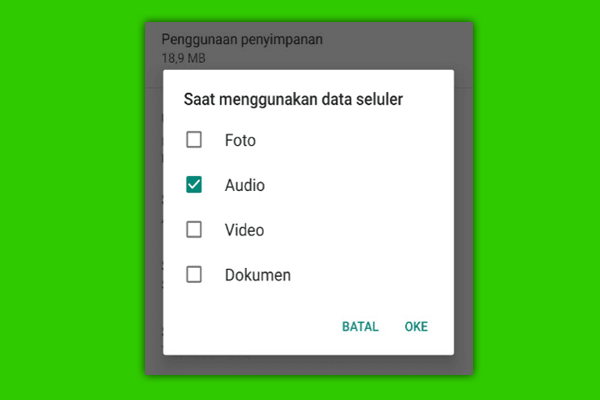
Once the Signal app opens, select the contact that you want to share the voice note with. You can also send it to Note to self in which case the voice note will be sent to yourself. Select whichever option you want.
The voice note that you sent will now appear in the chat of the contact in the Signal App.
That’s everything that you need to know about how to save voice notes. We hope you found this article helpful, in case you run into any difficulties, do let us know in the comments and we will help you out. Do take care and stay safe!
RELATED
One of the most popular messaging apps today, there’s no doubt that WhatsApp is regularly used to send hundreds of thousands of audio files around the globe. But how do you save audio from WhatsApp easily on your iPhone or Android phone? This article provides 5 different methods.
WhatsApp is a convenient way of sending all kinds of messages, but saving these messages can sometimes be tricky.
This is especially true when it comes to audio messages and even more so if you’re using an iPhone since you can’t directly access files on iOS phones like you can with Androids.
In this article, I’ll teach you how to save audio from WhatsApp, whether you’re using an Android or iPhone.
Contents
 2 Where Are WhatsApp Voice Notes Stored On iPhone?
As mentioned above, saving WhatsApp audio files can be quite tricky on an iPhone since you can’t directly access an app’s storage files. On an Android phone, you can simply open the file manager and access your files that way.
However, there are a few ways to export audio files from your iPhone’s WhatsApp: using email and using the Files app.
This section will go through each method.
The easiest and most convenient method to save WhatsApp voice messages and other audio files is through email.
However, the main disadvantage is that you can only send one audio message at a time, which can be time-consuming if you want to save multiple files.
If you don’t mind this downside, though, follow the steps below.
Since you can’t access app storage files, you need to export WhatsApp media files first in order to save them to your Files app.
This works the same way as an Android File Manager, except it’s a lot more limited and it only contains certain files.
You know how Android File Manager has folders showing what the different apps contain, including their developer packages? You won’t find this with iOS Files.
To save your voice messages and voice notes using this method, follow the steps below.
 In this case, we’ll click Downloads.
Another method to save your audio from WhatsApp easily on iPhone is to use the Export Chat function.
This is a great way to save audio files if you have many of them since you’ll be able to save them all in one go. However, you can’t use it to just save one file, just the entire chat.
The biggest advantage of this method is that once you open it, you get access to all the files at once.

As mentioned, it’s easier to save WhatsApp audio files on Android.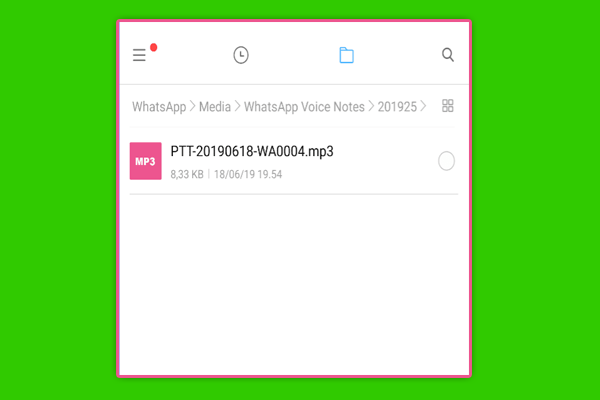 If you want to save just one audio file in a conversation, you can also just export it to your email.
To do so, follow the steps below.
You now have your WhatsApp audio file saved to your Android phone.
Unlike with iPhones, you can access the app’s storage files on Android with any file manager app. This means you can directly copy the audio files from WhatsApp’s raw files without exporting them to your email.
Accessing the File Manager is the most efficient method to save audio from WhatsApp since you can easily use it for multiple and single files alike.
To learn how to use this method, follow the steps below.
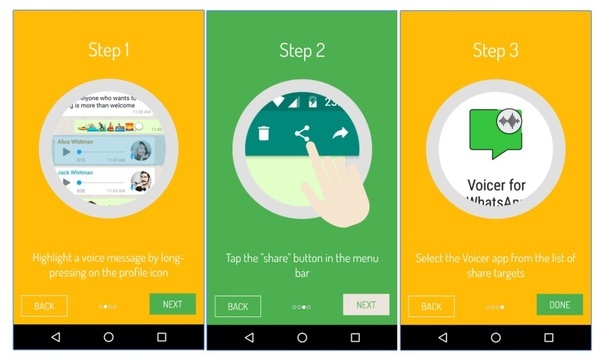 In this case, I pasted it to the Music folder of my External Storage.
Once it’s pasted to another location, you can now do what you want with it, including converting the WhatsApp audio to text.
There are also third-party solutions that allow you to easily transfer WhatsApp audio to the computer. With an app like this installed, you can easily share your audio file back to your phone or upload it to cloud storage.
Wondershare’s MobileTrans is a good example of this. It’s a third-party file management solution that can download files from your device in just a few clicks. You can also use it to transfer files from iPhone to Android and vice versa or even create a backup for both operating systems.
The only downside to using this service is that it isn’t free. The app starts at $29.95 for a year’s worth of features on Windows devices. However, if you find yourself often needing this service, it’s a small price to pay for the convenience.
If you want to use MobileTrans to save audio from WhatsApp, purchase a subscription now and follow the steps below.
 Simply uncheck the file types that you don’t need. For this tutorial, I’ll go ahead and back up everything.
 WhatsApp’s audio files are typically stored in your Android phone’s internal storage. More specifically, you can find the files by going to the main WhatsApp folder, then Media, and then the WhatsApp Audio folder.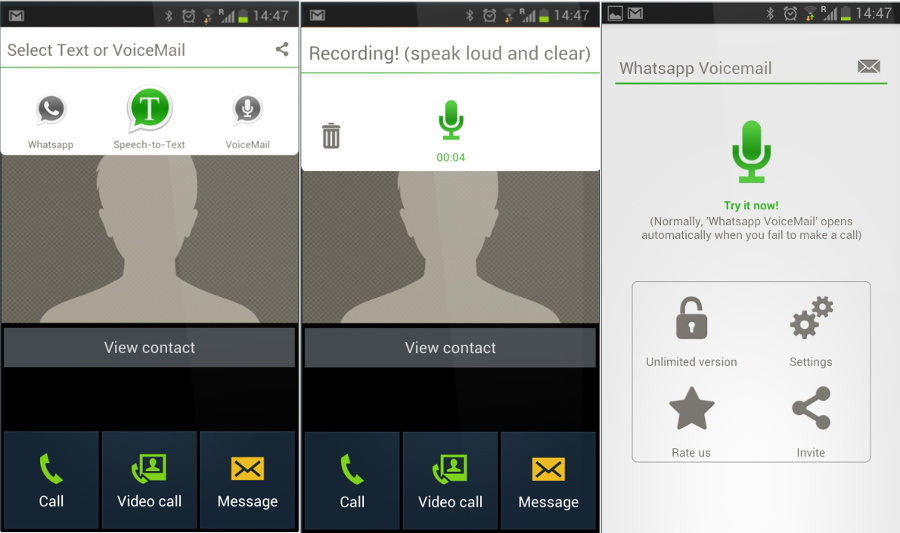 Here, you can see a list of all the audio files downloaded through WhatsApp.
WhatsApp voice notes stored on iPhone can be found in the audio folder since they’re a type of audio file. However, you can’t see them directly on your iPhone, so you have to either email them first, save them to your Files app, or export a .zip file.
If you can’t download audio on WhatsApp, you might be experiencing problems with your internet connection, internal storage, or WhatsApp settings. Make sure to check all three to see which one is having an issue.
There are several ways to transfer WhatsApp audio files from iPhone to your computer. You can email the audio file to yourself, upload it to iCloud and download it to your computer from there, or use a third-party solution like Wondershare MobileTrans.
Although it has its advantages and disadvantages, WhatsApp is a convenient and popular app to use in our daily lives. This app can send messages for free and even files such as photos, videos, audio, and documents. However, it can be tricky if you want to download these media files from WhatsApp, especially if you’re using an iPhone.
This article discussed several methods to save audio files from WhatsApp to Android, iPhone, and even a computer. If you follow these instructions, you will never experience the hassle of figuring out how to transfer files again.
Did you enjoy this article? Have you tried any of these methods? Let us know in the comments!
How to save a voice message from Whatsapp - one or several at once? Where can I find saved files and how can I transfer them to third-party services? Today we will tell you what you can do on smartphones (iOS and Android) and computers.
And all smartphones have a folder where Whatsapp voice messages are saved, both on Android and iOS. In the messenger settings, you can choose the conditions under which the automatic download will be performed. The extension of the saved file in both cases will be the same - “.opus”. What does it give us:
Below we will tell you how to download a voice message (by auto download) from WhatsApp on iOS and Android, as well as forward it for storage to other services.
How to download an audio message (set up autosave) from WhatsApp to your smartphone's memory:
*Upper right corner.
Please note: if you do not want to spend mobile Internet traffic in roaming, then skip the "In roaming" item. In this case, auto-download will be performed only in the home network and when connected to a Wi-Fi point.
First, find where Whatsapp voice messages are stored on Android:
Then you can act both directly from the dialog box and from the storage location of voice messages on the device. It all depends on what exactly you need. If we are talking about sending to another user or yourself to some storage of just one file, then everything can be done from the chat:0003
If you need to download more than one voice message from WhatsApp to another location, but several at once, it will be much easier to do it directly from the file storage location. Let's go:
The autosave setup process here is the same as in Android. Therefore, we will not repeat ourselves - you just need to follow the instructions already given. Further, in order to save the voice from WhatsApp in the cloud or send it to another service, you need:
 Tap on the option that suits you and then follow the prompts of the system.
 Please note: the audio is sent in the same *.opus format. On Windows, it is played by a regular player, and on other operating systems, you may have to use third-party software.
It will not work to see where Whatsapp voice messages are stored or perform some manipulations with them directly in the storage location. This is due to the peculiarities of the file system in iOS devices - it is closed. We can manage goal
How to extract a voice message from Whatsapp for listening through the player:

That's it. Now, when you start the player, files transferred from WhatsApp will be displayed among those available for listening.
Downloading messages from instant messengers to the memory of a computer on Windows is the easiest thing. The scheme is standard, used in working with any files, looks like “Download → select a save location → Save”.
To save a voice message from WhatsApp, you need:

*Recommended. This will make it easier to find the desired audio among others.
We hope that the material we have collected will be useful to you. And if you need any more information on using WhatsApp, then you can find it at any time on our website!
The query "how to save a voice message from WhatsApp" is one of the most popular in search engines. The fact is that the exchange of voice messages and audio files is one of the popular functions of the WhatsApp messenger.
Such files are very popular. There is such a category of users who prefer to “say” a message in a “live” voice, rather than write. This is very convenient and more natural than sending an emotionless text.
There are also those who collect audio content on their phones. For example, tracks of favorite songs, good music and all the same voice messages.
Please note! This article will discuss how to download audio content to your phone and PC.
For example, received voice messages and audio files.
The algorithm for the mobile version of Vatsap will be considered using the Android operating system of the Xiaomi Redmi 7 phone as an example.
Other models of the manufacturer, as well as other manufacturers, may have differences in the interface, but the algorithm is identical.
I would like to note that in the mobile version, saving files of this type is possible in several ways. Moreover, the algorithm is not much different from saving other types of content: photos, pictures, video content.
When the WhatsApp mobile application is installed on the user's smartphone, all program settings are set to default. In the default settings of the auto-download function of received content and, in particular, audio messages, the option is set to “enabled” by default.
Moreover, such files are saved in a specific phone storage folder. They get there automatically after listening to an audio message or audio file. True, finding this content in the repository is not very convenient. Therefore, many users prefer to move their other folder.
Important! For the convenience of performing the actions described in the algorithm, the file manager built into Xiaomi Redmi 7 from the manufacturer will be used. It is called "Explorer" in the interface.
You can also download any other Android file manager, such as Google Files, to your mobile device. It can be downloaded from the Google Play Market.
Before we talk about how to save audio from WhatsApp, it is important to check that the auto-download feature on your phone is not disabled.
To do this, go to the application settings (1). Next, open the “Data and storage” section (2), inside which for the mobile network, Wi-Fi, and if the user is roaming (3), check that the “Audio” file type (4) is ticked.
If not, check and click OK (5) to save the setting.
After checking or enabling the necessary options, you must exit the WhatsApp settings.
To save the received audio file on your mobile device, you need to open a chat with the file or voice message. Next, you need to wait until it downloads to your phone, then you need to minimize the messenger and open Explorer.
In Explorer you need to find the "WhatsApp" folder (1), and in it - "Media" (2). There are many subfolders inside this folder. Audio files are stored in the "WhatsApp Audio" folder (3), and voice messages are stored in the "WhatsApp Voice Notes" folder (4).
In these folders, you can find absolutely all the files that the user has ever received on a mobile device.
Moreover, audio files can be saved in the formats in which they are recorded by default. There is a specific format for voice messages, these are files with the opus extension. Voice messages are grouped in folders collected for a certain day.
Please note! For those users who are interested in files with the opus extension. This format is quite popular, although not well known.
Moreover, files of this type are usually "readable" by all popular music players for Android devices. For example, the most demanded AIMP player.
So, now, in fact, we have come to the answer to the question of interest "how to save a voice message from WhatsApp." Or rather, move / copy the resulting file from the Watsap system folder to the user's personal folder.
To do this, mark the voice file (1) and use the menu commands located at the bottom of the window: “Move” (2) or “More” (3) => “Copy” (4).
After that, a window will open in which you need to specify where you want to move / copy the file (5), and, having selected a folder for the file (6), use the Paste command (7).
After the file has been successfully copied/moved, you can rename it.
The audio file from the WhatsApp Audio folder is copied/moved in the same way.
This method is much easier than the previous one, moreover, it is successfully used by most users. The Share feature is built into the Android operating system. It is used for various purposes, as well as for sending various files received on the network. And also in the mobile device explorer.
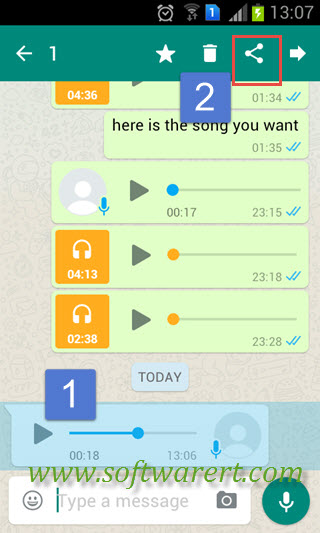
To do this, you need to open the WhatsApp messenger. Then find the chat where the desired audio file or voice message is present. Mark the voice message or audio file (1) that you want to save on your phone. After that, a menu will appear at the top of the window.
Click on the Share icon (2). This action will cause a panel to appear at the bottom with a set of applications where you can share the file. In particular, the user should be interested in the "Copy to . .." folder tab (3), clicking on which will open Explorer.
Inside the file manager, you must select "Internal shared storage" (4), and inside - the desired folder where the user plans to save the file (5). After selecting the target folder, you need to click on the "Insert" icon (6).
After that, the file will be saved, now it will be very easy to find it.
As can be seen from the algorithm, everything is quite simple. Therefore, the user no longer sees the difficulty in the question of how to save audio from WhatsApp. He can do this using his favorite function - "Share".
Important! Both algorithms in the Android OS described above are also valid for saving other types of files.
The WhatsApp desktop client is generally considered to be a simplified version of the mobile app. And it is only capable of playing everything that happens on the user's main device.
In terms of answering the question “how to save a voice message from WhatsApp”, the same can be said. On the desktop, as well as in the web version of the application, this action looks much more prosaic than in the mobile application.
In addition, unfortunately, there is no favorite "Share" function, which is so accustomed to the owners of mobile devices with Android.
In order to save an audio file or a voice message to a PC, the user needs to open the desired chat. Then move the mouse over the file you want to save and then click on the arrow (1) to the right of the file. In this case, a menu will appear on the screen, in which you need to select the line "Download" (2).
This action will open Windows Explorer. The user needs to select a folder (1), come up with a new name for the file and enter it in the line (2), then click on the "Save" button (3):
This is enough to save the file on the PC. You can find the saved file in the very folder that the user selected at the save stage.